MAPS
Animal Breathing
Summary
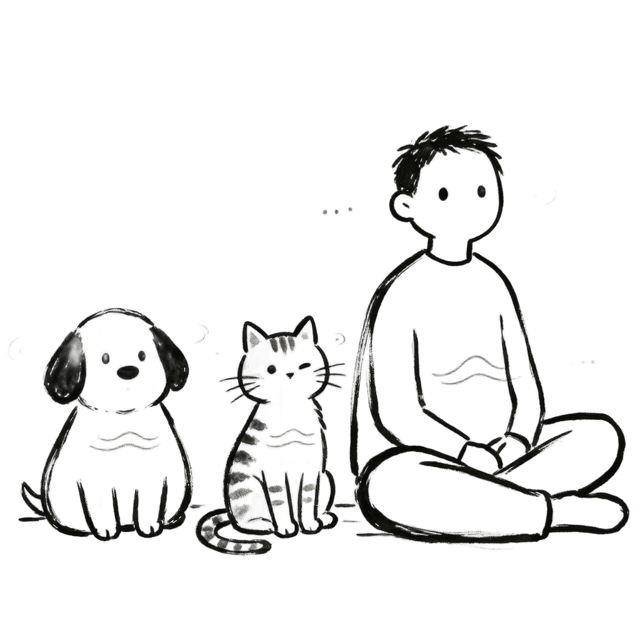
Students imitate a dog's panting (deep, belly breathing) and a cat's silent, shallow breathing, discovering correct singing-breath technique through play — relaxed shoulders and diaphragmatic support.
Procedures
- 1
Discuss: how do different animals breathe?
- 2
Learn how dogs breathe: tongue out, breathing through the nose and mouth together.
- 3
Imitate the dog: the belly fills on the inhale and flattens on the exhale — shoulders must stay down.
- 4
Learn how cats breathe: quietly, hardly noticeable.
- 5
Compare the two: dog = deep breath (clear belly movement); cat = shallow breath (body almost still).
- 6
Observe how your friends breathe.
Variations
1. Try the imitation sitting or standing.
2. A sip of water before the game makes it easier.
3. Alternating game: the teacher says “woof” for dog breathing and “meow” for cat breathing — students switch instantly.
4. Vary the speed of the panting rhythm.
Activity Preparation
1.Pictures or short videos of dogs and cats breathing (optional, to deepen understanding);
2. Teacher demonstrates the movements first to reduce shyness.
Activity Sources
- Source Type:
- Textbook / Book
- Source:
- Music Classroom Games: 53 Ways to Teach Music Well — Step One , activity “Animal Breathing”.
MAPS teaching activities may come from a variety of sources, including original contributions by the MAPS team, online resources, published materials, activities learned from teachers, activities shared by colleagues, traditional teaching practices, and other sources. When a source can be reasonably identified, we make every effort to acknowledge it on the relevant activity page or in the accompanying reference information.
Some content may be organized, translated, structured, or adapted by the MAPS team for specific teaching contexts. Such editorial or instructional adaptation does not mean that MAPS claims ownership of the underlying third-party material. Rights to third-party content remain with the original authors, publishers, or other lawful rights holders.
If you are an author, copyright holder, or authorized representative and have questions or concerns regarding the source, attribution, or use of any content, please contact us:
Email: musicactivityps@gmail.com
Animal Breathing
Summary
Students imitate a dog's panting (deep, belly breathing) and a cat's silent, shallow breathing, discovering correct singing-breath technique through play — relaxed shoulders and diaphragmatic support.
Procedures
- 1
Discuss: how do different animals breathe?
- 2
Learn how dogs breathe: tongue out, breathing through the nose and mouth together.
- 3
Imitate the dog: the belly fills on the inhale and flattens on the exhale — shoulders must stay down.
- 4
Learn how cats breathe: quietly, hardly noticeable.
- 5
Compare the two: dog = deep breath (clear belly movement); cat = shallow breath (body almost still).
- 6
Observe how your friends breathe.
Variations
1. Try the imitation sitting or standing.
2. A sip of water before the game makes it easier.
3. Alternating game: the teacher says “woof” for dog breathing and “meow” for cat breathing — students switch instantly.
4. Vary the speed of the panting rhythm.
Activity Preparation
1.Pictures or short videos of dogs and cats breathing (optional, to deepen understanding);
2. Teacher demonstrates the movements first to reduce shyness.
Activity Sources
- Source Type:
- Textbook / Book
- Source:
- Music Classroom Games: 53 Ways to Teach Music Well — Step One , activity “Animal Breathing”.
MAPS teaching activities may come from a variety of sources, including original contributions by the MAPS team, online resources, published materials, activities learned from teachers, activities shared by colleagues, traditional teaching practices, and other sources. When a source can be reasonably identified, we make every effort to acknowledge it on the relevant activity page or in the accompanying reference information.
Some content may be organized, translated, structured, or adapted by the MAPS team for specific teaching contexts. Such editorial or instructional adaptation does not mean that MAPS claims ownership of the underlying third-party material. Rights to third-party content remain with the original authors, publishers, or other lawful rights holders.
If you are an author, copyright holder, or authorized representative and have questions or concerns regarding the source, attribution, or use of any content, please contact us:
Email: musicactivityps@gmail.com