 MAPS
Articulation Through Five-Finger Patterns
Summary
A class piano articulation activity in which students build on their fluency with major five-finger patterns by reviewing two-note slurs and staccato, applying them first in C major, then performing from a notated example with specific articulation markings, and finally transposing the same articulation pattern chromatically through different keys.
Procedures
- 1
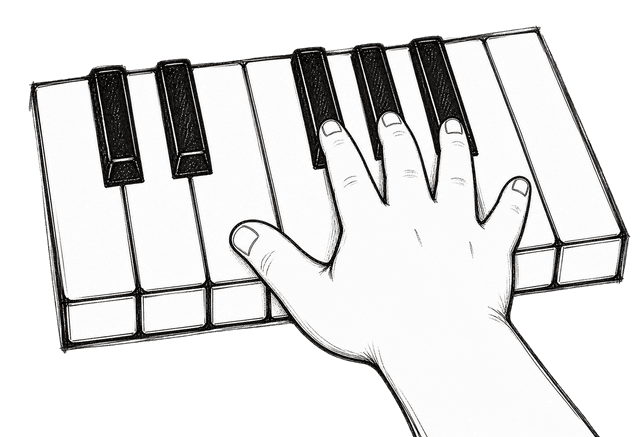
Review the Major Five-Finger Pattern. In C major, students review the pattern with the right hand, then the left hand, and finally hands together at an even tempo with no added articulation.
- 2
Review Two-Note Slurs. The teacher demonstrates a two-note slur and emphasizes the wrist down-up motion: a natural drop on the first note and a light release on the second. Students practice with each hand separately.
- 3
Review Staccato. The teacher reviews staccato articulation with clear and short sound. Students practice short staccato articulation with the right and left hands separately.
- 4
Apply Two-Note Slurs. Students apply the two-note slur pattern to the C major five-finger pattern, first with the right hand, then the left hand, and finally hands together.
- 5
Apply Staccato. Students perform the same C major five-finger pattern in staccato, again progressing from right hand to left hand to hands together.
- 6
Read and Perform the example score. Students study a provided score, identify where the two-note slurs and staccato markings occur, and perform the five-finger pattern exactly as notated.
- 7
Chromatic Key Challenge. Keeping the same articulation pattern, students move the major five-finger pattern upward by half step, for example C → Db → D → Eb → E → F, and continue through additional keys as appropriate.
Variations
1. More challenging: The teacher randomly assigns a key, right hand/left hand/hands together, and an articulation pattern; students immediately locate the position and perform it.
2. More challenging: Continue the chromatic sequence through more keys without stopping while maintaining consistent articulation and tempo.
Activity Preparation
1.Students should already be able to play major five-finger patterns fluently in any key, with the right hand, left hand, and hands together.
They should know the standard fingering and basic keyboard positions. Prepare a short five-finger pattern score containing two-note slurs and staccato markings.
Activity Sources
- Source Type:
- MAPS Original
- Adaptation Notes:
- Adapted from Alfred’s Group Piano for Adults, Student Book 1 (2nd ed.). The legato and staccato activity was developed as an original teaching activity based on the concepts presented in the textbook.
MAPS teaching activities may come from a variety of sources, including original contributions by the MAPS team, online resources, published materials, activities learned from teachers, activities shared by colleagues, traditional teaching practices, and other sources. When a source can be reasonably identified, we make every effort to acknowledge it on the relevant activity page or in the accompanying reference information.
Some content may be organized, translated, structured, or adapted by the MAPS team for specific teaching contexts. Such editorial or instructional adaptation does not mean that MAPS claims ownership of the underlying third-party material. Rights to third-party content remain with the original authors, publishers, or other lawful rights holders.
If you are an author, copyright holder, or authorized representative and have questions or concerns regarding the source, attribution, or use of any content, please contact us:
Email: musicactivityps@gmail.com
Articulation Through Five-Finger Patterns
Summary
A class piano articulation activity in which students build on their fluency with major five-finger patterns by reviewing two-note slurs and staccato, applying them first in C major, then performing from a notated example with specific articulation markings, and finally transposing the same articulation pattern chromatically through different keys.
Procedures
- 1
Review the Major Five-Finger Pattern. In C major, students review the pattern with the right hand, then the left hand, and finally hands together at an even tempo with no added articulation.
- 2
Review Two-Note Slurs. The teacher demonstrates a two-note slur and emphasizes the wrist down-up motion: a natural drop on the first note and a light release on the second. Students practice with each hand separately.
- 3
Review Staccato. The teacher reviews staccato articulation with clear and short sound. Students practice short staccato articulation with the right and left hands separately.
- 4
Apply Two-Note Slurs. Students apply the two-note slur pattern to the C major five-finger pattern, first with the right hand, then the left hand, and finally hands together.
- 5
Apply Staccato. Students perform the same C major five-finger pattern in staccato, again progressing from right hand to left hand to hands together.
- 6
Read and Perform the example score. Students study a provided score, identify where the two-note slurs and staccato markings occur, and perform the five-finger pattern exactly as notated.
- 7
Chromatic Key Challenge. Keeping the same articulation pattern, students move the major five-finger pattern upward by half step, for example C → Db → D → Eb → E → F, and continue through additional keys as appropriate.
Variations
1. More challenging: The teacher randomly assigns a key, right hand/left hand/hands together, and an articulation pattern; students immediately locate the position and perform it.
2. More challenging: Continue the chromatic sequence through more keys without stopping while maintaining consistent articulation and tempo.
Activity Preparation
1.Students should already be able to play major five-finger patterns fluently in any key, with the right hand, left hand, and hands together.
They should know the standard fingering and basic keyboard positions. Prepare a short five-finger pattern score containing two-note slurs and staccato markings.
Activity Sources
- Source Type:
- MAPS Original
- Adaptation Notes:
- Adapted from Alfred’s Group Piano for Adults, Student Book 1 (2nd ed.). The legato and staccato activity was developed as an original teaching activity based on the concepts presented in the textbook.
MAPS teaching activities may come from a variety of sources, including original contributions by the MAPS team, online resources, published materials, activities learned from teachers, activities shared by colleagues, traditional teaching practices, and other sources. When a source can be reasonably identified, we make every effort to acknowledge it on the relevant activity page or in the accompanying reference information.
Some content may be organized, translated, structured, or adapted by the MAPS team for specific teaching contexts. Such editorial or instructional adaptation does not mean that MAPS claims ownership of the underlying third-party material. Rights to third-party content remain with the original authors, publishers, or other lawful rights holders.
If you are an author, copyright holder, or authorized representative and have questions or concerns regarding the source, attribution, or use of any content, please contact us:
Email: musicactivityps@gmail.com