 MAPS
Blow the Hot Soup, Blow Out the Candles
Summary
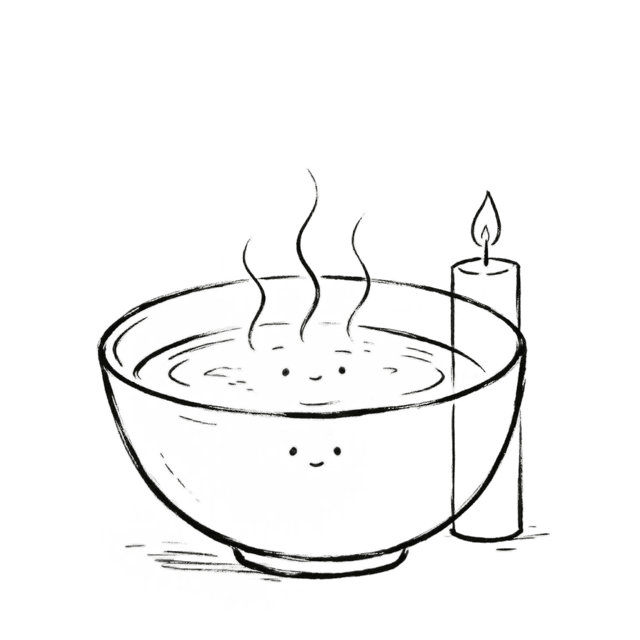
Through two imaginary situations — gently blowing a bowl of hot soup and strongly blowing out birthday candles — students feel two different ways of using the breath and learn to control their air flow and support.
Procedures
- 1
Hold an open hand in front of the mouth and blow with “whoosh” to feel the breath and its temperature.
- 2
Imagine a bowl of hot noodles; blow with “whoosh” to feel the steam.
- 3
The soup is too hot to cool at once — blow steadily for several seconds until it cools down.
- 4
Now imagine a birthday cake with burning candles; you have to blow them out.
- 5
Imagine: One breath is not enough; you need at least three short, strong puffs.
- 6
Feel the difference between the two ways of blowing, then blow longer and more times.
Variations
1. Feel the airflow with a hand or a tissue.
2. Students who can't produce a strong breath can practice by blowing up a balloon.
3. Mime acting: gently blow the hot soup (blow too hard and it will splash) vs. strongly blow the candles — alternate the two.
4. Remember not to raise the shoulders when blowing.
Activity Preparation
1.No props needed (a tissue can help students feel the airflow);
Balloons (optional) for extra breath practice.
Activity Sources
- Source Type:
- Textbook / Book
- Source:
- Music Classroom Games: 53 Ways to Teach Music Well — Step One , activity “Blow the Hot Soup, Blow Out the Candles” (No. 2).
MAPS teaching activities may come from a variety of sources, including original contributions by the MAPS team, online resources, published materials, activities learned from teachers, activities shared by colleagues, traditional teaching practices, and other sources. When a source can be reasonably identified, we make every effort to acknowledge it on the relevant activity page or in the accompanying reference information.
Some content may be organized, translated, structured, or adapted by the MAPS team for specific teaching contexts. Such editorial or instructional adaptation does not mean that MAPS claims ownership of the underlying third-party material. Rights to third-party content remain with the original authors, publishers, or other lawful rights holders.
If you are an author, copyright holder, or authorized representative and have questions or concerns regarding the source, attribution, or use of any content, please contact us:
Email: musicactivityps@gmail.com
Blow the Hot Soup, Blow Out the Candles
Summary
Through two imaginary situations — gently blowing a bowl of hot soup and strongly blowing out birthday candles — students feel two different ways of using the breath and learn to control their air flow and support.
Procedures
- 1
Hold an open hand in front of the mouth and blow with “whoosh” to feel the breath and its temperature.
- 2
Imagine a bowl of hot noodles; blow with “whoosh” to feel the steam.
- 3
The soup is too hot to cool at once — blow steadily for several seconds until it cools down.
- 4
Now imagine a birthday cake with burning candles; you have to blow them out.
- 5
Imagine: One breath is not enough; you need at least three short, strong puffs.
- 6
Feel the difference between the two ways of blowing, then blow longer and more times.
Variations
1. Feel the airflow with a hand or a tissue.
2. Students who can't produce a strong breath can practice by blowing up a balloon.
3. Mime acting: gently blow the hot soup (blow too hard and it will splash) vs. strongly blow the candles — alternate the two.
4. Remember not to raise the shoulders when blowing.
Activity Preparation
1.No props needed (a tissue can help students feel the airflow);
Balloons (optional) for extra breath practice.
Activity Sources
- Source Type:
- Textbook / Book
- Source:
- Music Classroom Games: 53 Ways to Teach Music Well — Step One , activity “Blow the Hot Soup, Blow Out the Candles” (No. 2).
MAPS teaching activities may come from a variety of sources, including original contributions by the MAPS team, online resources, published materials, activities learned from teachers, activities shared by colleagues, traditional teaching practices, and other sources. When a source can be reasonably identified, we make every effort to acknowledge it on the relevant activity page or in the accompanying reference information.
Some content may be organized, translated, structured, or adapted by the MAPS team for specific teaching contexts. Such editorial or instructional adaptation does not mean that MAPS claims ownership of the underlying third-party material. Rights to third-party content remain with the original authors, publishers, or other lawful rights holders.
If you are an author, copyright holder, or authorized representative and have questions or concerns regarding the source, attribution, or use of any content, please contact us:
Email: musicactivityps@gmail.com