MAPS
Chord Shape Recognition
Summary
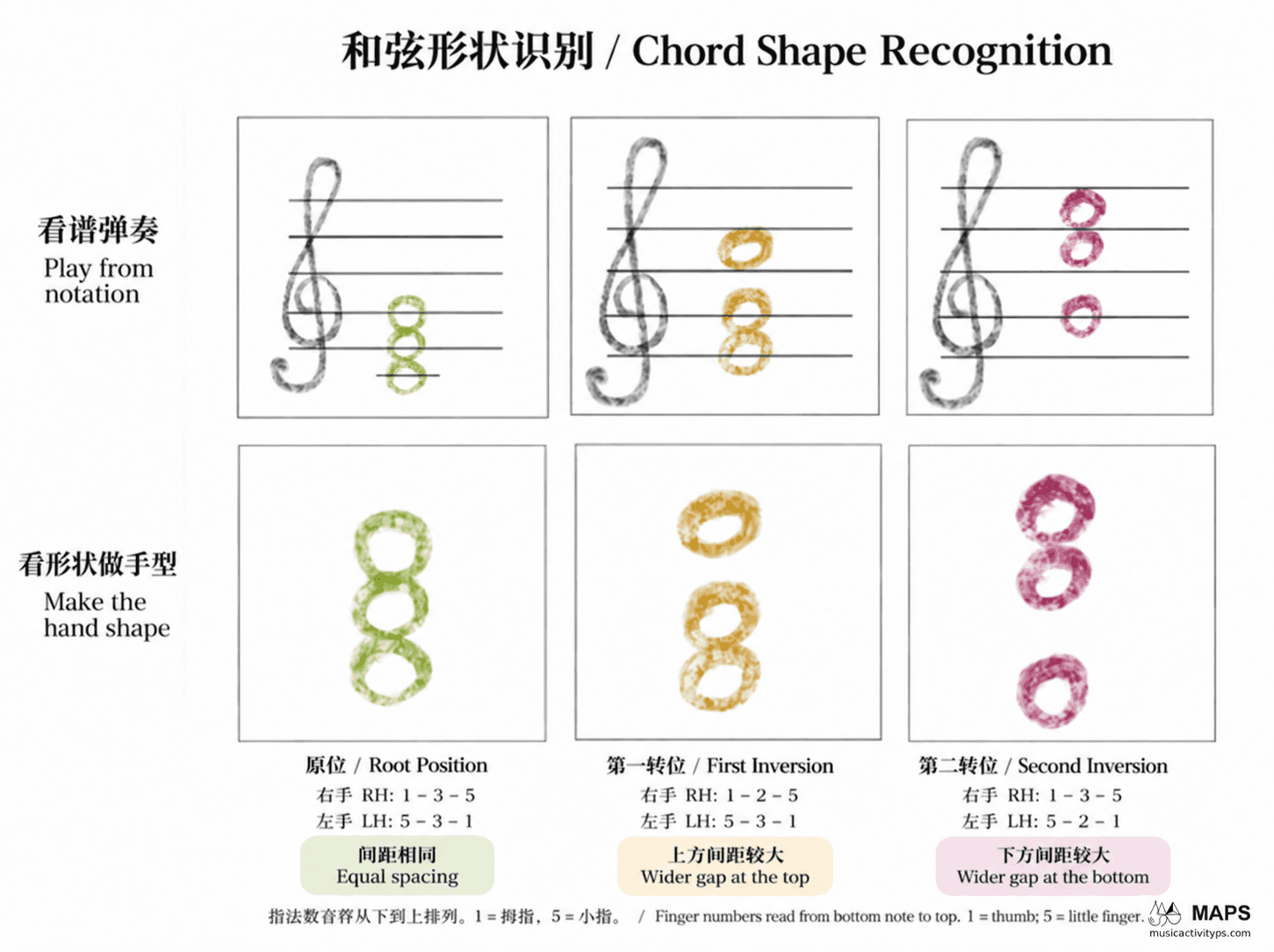
This activity develops recognition of root-position, first-inversion, and second-inversion triad shapes. Students first play each shape from treble-clef notation with both hands and connect the visual spacing of the notes with the corresponding keyboard hand shape. They then identify the same shapes without staff notation by showing them on the desk or in the air. Finally, students respond to the prepared quick-recognition game, strengthening speed and confidence in recognizing and forming each triad shape.
Procedures
- 1
Play and learn the three chord shapes from notation.
Show the version with treble clef notation. Introduce root-position, first-inversion, and second-inversion triads. Students play each chord shape on the keyboard, first with the right hand and then with the left hand, using the suggested fingering. Encourage them to notice and remember how the hand opens or closes for each shape.
- 2
Recognize and show the shapes without staff notation.
Show the chord-shape cards without the treble clef. Students identify each familiar shape and form it with one hand on the desk or in the air, without playing yet. Invite students to compare the spacing of the three notes and connect that spacing with the hand shape they used at the keyboard.
- 3
Quick-recognition game.
Play the prepared video game. As each chord-shape card appears, students quickly show the corresponding right- or left-hand shape on the desk or in the air. Pause when useful to let students name the shape—root position, first inversion, or second inversion—and then check it by playing it on the keyboard. Repeat the game to build speed and confidence.
Variations
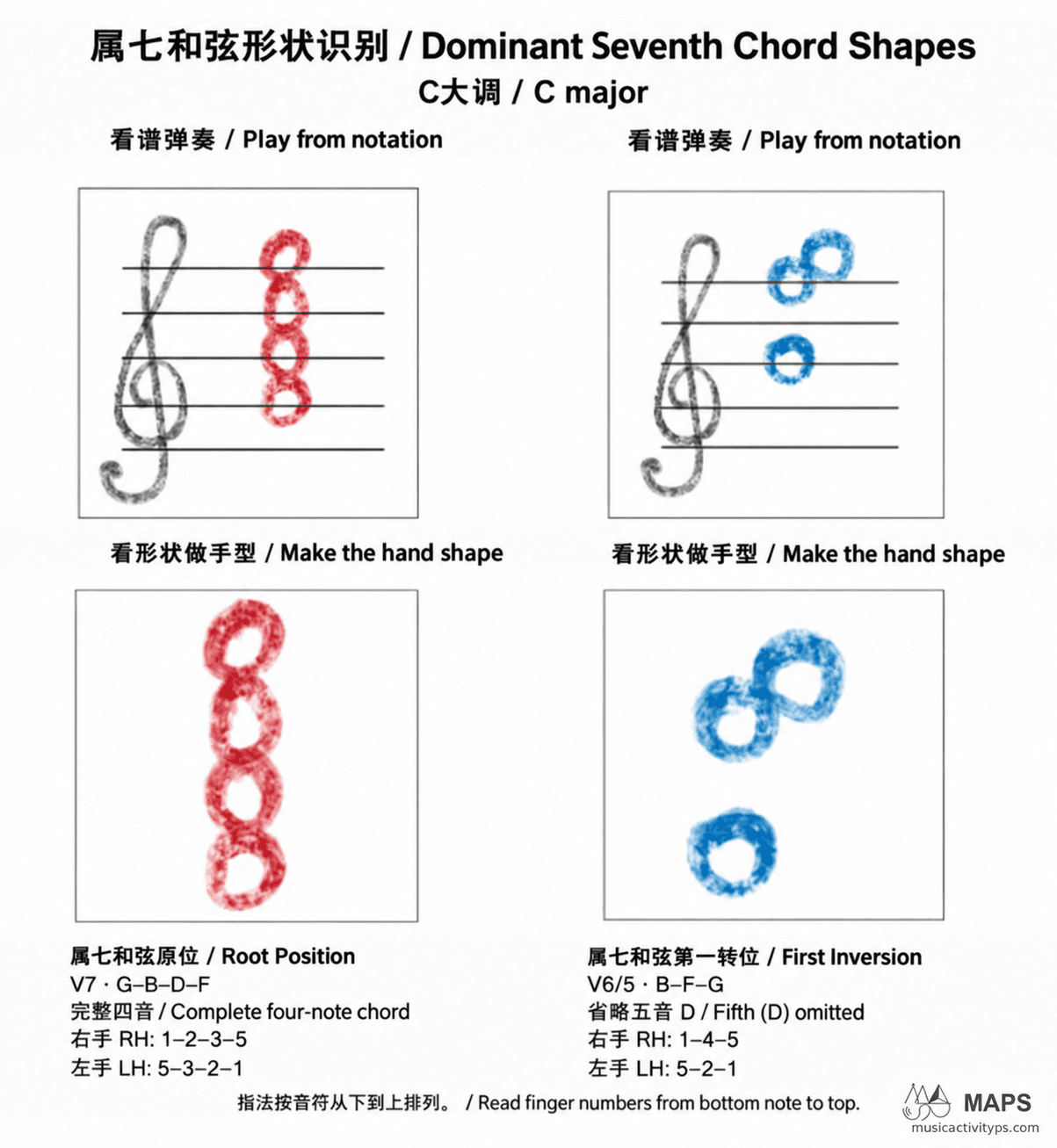
1. Extend to dominant-seventh shapes. After students are secure with root-position, first-inversion, and second-inversion triads, introduce V7 and V6/5. Follow the same sequence: play each chord from notation, recognize its simplified shape without notation, and then add it to the quick-recognition game. Guide students to notice the additional chord tone and the larger hand span required for four-note chords.
2. Mix triads and seventh chords. Combine the three triad shapes with V7 and V6/5 in later game rounds. Students first show the shape, then identify whether it is a triad or a seventh chord; when appropriate, they name its inversion and play it on the keyboard to check.
3. Increase response speed. Once students can distinguish all shapes accurately, shorten the response time or create new video rounds with a less predictable order.
Activity Preparation
1. Piano or keyboard
2. Printed chord-shape card set:
a. staff-notation cards for introducing and playing the triad shapes;
b. simplified chord-shape cards without staff notation for desk or in-the-air responses.
3. Device and display for playing the prepared quick-recognition game video
4. Printed V7 and V6/5 cards, if using the extension
Activity Sources
- Source Type:
- MAPS Original
- Adaptation Notes:
- The colored-circle visual was inspired by a peer-shared teaching idea; the activity sequence, materials, and game-based application were developed for this activity by MAPS.
MAPS teaching activities may come from a variety of sources, including original contributions by the MAPS team, online resources, published materials, activities learned from teachers, activities shared by colleagues, traditional teaching practices, and other sources. When a source can be reasonably identified, we make every effort to acknowledge it on the relevant activity page or in the accompanying reference information.
Some content may be organized, translated, structured, or adapted by the MAPS team for specific teaching contexts. Such editorial or instructional adaptation does not mean that MAPS claims ownership of the underlying third-party material. Rights to third-party content remain with the original authors, publishers, or other lawful rights holders.
If you are an author, copyright holder, or authorized representative and have questions or concerns regarding the source, attribution, or use of any content, please contact us:
Email: musicactivityps@gmail.com
Chord Shape Recognition
Summary
This activity develops recognition of root-position, first-inversion, and second-inversion triad shapes. Students first play each shape from treble-clef notation with both hands and connect the visual spacing of the notes with the corresponding keyboard hand shape. They then identify the same shapes without staff notation by showing them on the desk or in the air. Finally, students respond to the prepared quick-recognition game, strengthening speed and confidence in recognizing and forming each triad shape.
Procedures
- 1
Play and learn the three chord shapes from notation.
Show the version with treble clef notation. Introduce root-position, first-inversion, and second-inversion triads. Students play each chord shape on the keyboard, first with the right hand and then with the left hand, using the suggested fingering. Encourage them to notice and remember how the hand opens or closes for each shape.
- 2
Recognize and show the shapes without staff notation.
Show the chord-shape cards without the treble clef. Students identify each familiar shape and form it with one hand on the desk or in the air, without playing yet. Invite students to compare the spacing of the three notes and connect that spacing with the hand shape they used at the keyboard.
- 3
Quick-recognition game.
Play the prepared video game. As each chord-shape card appears, students quickly show the corresponding right- or left-hand shape on the desk or in the air. Pause when useful to let students name the shape—root position, first inversion, or second inversion—and then check it by playing it on the keyboard. Repeat the game to build speed and confidence.
Variations
1. Extend to dominant-seventh shapes. After students are secure with root-position, first-inversion, and second-inversion triads, introduce V7 and V6/5. Follow the same sequence: play each chord from notation, recognize its simplified shape without notation, and then add it to the quick-recognition game. Guide students to notice the additional chord tone and the larger hand span required for four-note chords.
2. Mix triads and seventh chords. Combine the three triad shapes with V7 and V6/5 in later game rounds. Students first show the shape, then identify whether it is a triad or a seventh chord; when appropriate, they name its inversion and play it on the keyboard to check.
3. Increase response speed. Once students can distinguish all shapes accurately, shorten the response time or create new video rounds with a less predictable order.
Activity Preparation
1. Piano or keyboard
2. Printed chord-shape card set:
a. staff-notation cards for introducing and playing the triad shapes;
b. simplified chord-shape cards without staff notation for desk or in-the-air responses.
3. Device and display for playing the prepared quick-recognition game video
4. Printed V7 and V6/5 cards, if using the extension
Activity Sources
- Source Type:
- MAPS Original
- Adaptation Notes:
- The colored-circle visual was inspired by a peer-shared teaching idea; the activity sequence, materials, and game-based application were developed for this activity by MAPS.
MAPS teaching activities may come from a variety of sources, including original contributions by the MAPS team, online resources, published materials, activities learned from teachers, activities shared by colleagues, traditional teaching practices, and other sources. When a source can be reasonably identified, we make every effort to acknowledge it on the relevant activity page or in the accompanying reference information.
Some content may be organized, translated, structured, or adapted by the MAPS team for specific teaching contexts. Such editorial or instructional adaptation does not mean that MAPS claims ownership of the underlying third-party material. Rights to third-party content remain with the original authors, publishers, or other lawful rights holders.
If you are an author, copyright holder, or authorized representative and have questions or concerns regarding the source, attribution, or use of any content, please contact us:
Email: musicactivityps@gmail.com