 MAPS
Conductor
Summary
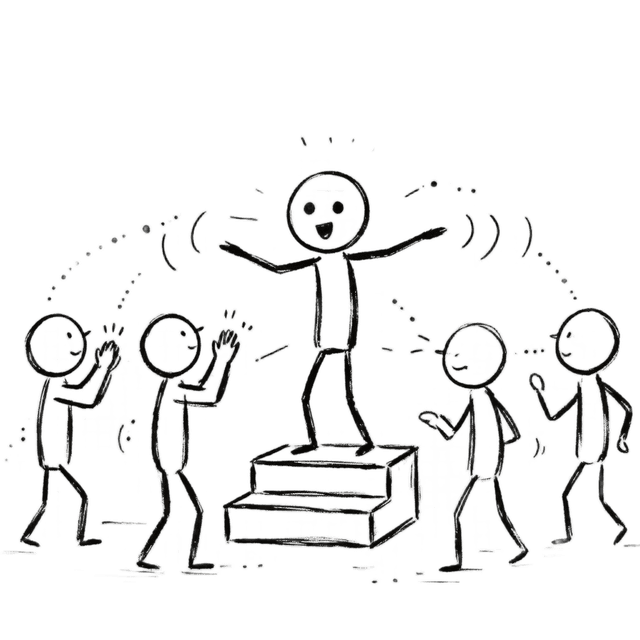
Students first sing a familiar song together, then respond to the teacher’s conducting gestures by changing the dynamics and tempo of their singing and by practicing starting and stopping on cue. Once students are familiar with the basic rules, they take turns acting as the conductor and use gestures to control the class’s singing. The activity helps students experience changes in dynamics and tempo through active singing and physical cues while also developing listening, observation, and ensemble coordination.
Procedures
- 1
The teacher selects a short song that the whole class already knows well, such as a familiar classroom song, and first has everyone sing it through once.
- 2
The teacher introduces the concept of dynamics and explains what different hand positions represent: a higher hand position means sing louder, a lower hand position means sing more softly, and a middle position indicates a medium volume.
- 3
The class sings the song again, adjusting the dynamics in real time according to the teacher’s hand position.
- 4
The teacher introduces the concept of tempo and uses the other hand or a conducting baton to move side to side: faster movement indicates a faster singing tempo, while slower movement indicates a slower tempo.
- 5
The class sings the same song again, changing the tempo in response to the teacher’s conducting gestures.
- 6
The teacher adds start and stop gestures, for example, an open hand to indicate “start” and a closed fist to indicate “stop.” Students sing again and respond accurately to these cues.
- 7
The teacher combines the three types of conducting information—dynamics, tempo, and start/stop—so that students must respond to all of them within the same performance.
- 8
Once students are familiar with the rules, invite them to take turns acting as the conductor and leading the class through the song. Repeat for several rounds as time allows so that more students can conduct.
Variations
1. Add More Articulations and Expressive Elements: For more advanced students, introduce additional concepts such as crescendo, decrescendo, legato, and staccato.
2. Non-Singing Version: Instead of using a song, students can complete the activity through humming, clapping, tapping, instrumental playing, or another single sound source.
3. Student-Designed Conducting Gestures: Ask students to create their own conducting gestures for fast, slow, loud, soft, start, and stop, then use those gestures to lead the class in singing or playing.
Activity Preparation
1. Select a short song that the whole class already knows well.
2. Make sure all students can clearly see the conductor. A circle formation or seating arrangement facing the conductor is recommended.
3. The teacher establishes and demonstrates the conducting gestures for dynamics, tempo, start, and stop in advance.
Activity Sources
- Source Type:
- Website / Online resource
- Source:
- GIVE Guide — Conductor Contributed by T. Scott Lilly https://teachwithgive.org/activities/conductor/
- Adaptation Notes:
- This documentation retains the original activity’s core structure: sing a familiar song—practice dynamics, tempo, and start/stop cues separately—combine the three elements—have students take turns conducting. The content has been reorganized to fit the activity format used in the MAPS database. The variations section incorporates ideas from the original webpage, including small-group conducting, introducing additional terminology across multiple lessons, and non-singing participation options. The suggestion for student-designed conducting gestures was added as an extension during the database documentation process.
MAPS teaching activities may come from a variety of sources, including original contributions by the MAPS team, online resources, published materials, activities learned from teachers, activities shared by colleagues, traditional teaching practices, and other sources. When a source can be reasonably identified, we make every effort to acknowledge it on the relevant activity page or in the accompanying reference information.
Some content may be organized, translated, structured, or adapted by the MAPS team for specific teaching contexts. Such editorial or instructional adaptation does not mean that MAPS claims ownership of the underlying third-party material. Rights to third-party content remain with the original authors, publishers, or other lawful rights holders.
If you are an author, copyright holder, or authorized representative and have questions or concerns regarding the source, attribution, or use of any content, please contact us:
Email: musicactivityps@gmail.com
Conductor
Summary
Students first sing a familiar song together, then respond to the teacher’s conducting gestures by changing the dynamics and tempo of their singing and by practicing starting and stopping on cue. Once students are familiar with the basic rules, they take turns acting as the conductor and use gestures to control the class’s singing. The activity helps students experience changes in dynamics and tempo through active singing and physical cues while also developing listening, observation, and ensemble coordination.
Procedures
- 1
The teacher selects a short song that the whole class already knows well, such as a familiar classroom song, and first has everyone sing it through once.
- 2
The teacher introduces the concept of dynamics and explains what different hand positions represent: a higher hand position means sing louder, a lower hand position means sing more softly, and a middle position indicates a medium volume.
- 3
The class sings the song again, adjusting the dynamics in real time according to the teacher’s hand position.
- 4
The teacher introduces the concept of tempo and uses the other hand or a conducting baton to move side to side: faster movement indicates a faster singing tempo, while slower movement indicates a slower tempo.
- 5
The class sings the same song again, changing the tempo in response to the teacher’s conducting gestures.
- 6
The teacher adds start and stop gestures, for example, an open hand to indicate “start” and a closed fist to indicate “stop.” Students sing again and respond accurately to these cues.
- 7
The teacher combines the three types of conducting information—dynamics, tempo, and start/stop—so that students must respond to all of them within the same performance.
- 8
Once students are familiar with the rules, invite them to take turns acting as the conductor and leading the class through the song. Repeat for several rounds as time allows so that more students can conduct.
Variations
1. Add More Articulations and Expressive Elements: For more advanced students, introduce additional concepts such as crescendo, decrescendo, legato, and staccato.
2. Non-Singing Version: Instead of using a song, students can complete the activity through humming, clapping, tapping, instrumental playing, or another single sound source.
3. Student-Designed Conducting Gestures: Ask students to create their own conducting gestures for fast, slow, loud, soft, start, and stop, then use those gestures to lead the class in singing or playing.
Activity Preparation
1. Select a short song that the whole class already knows well.
2. Make sure all students can clearly see the conductor. A circle formation or seating arrangement facing the conductor is recommended.
3. The teacher establishes and demonstrates the conducting gestures for dynamics, tempo, start, and stop in advance.
Activity Sources
- Source Type:
- Website / Online resource
- Source:
- GIVE Guide — Conductor Contributed by T. Scott Lilly https://teachwithgive.org/activities/conductor/
- Adaptation Notes:
- This documentation retains the original activity’s core structure: sing a familiar song—practice dynamics, tempo, and start/stop cues separately—combine the three elements—have students take turns conducting. The content has been reorganized to fit the activity format used in the MAPS database. The variations section incorporates ideas from the original webpage, including small-group conducting, introducing additional terminology across multiple lessons, and non-singing participation options. The suggestion for student-designed conducting gestures was added as an extension during the database documentation process.
MAPS teaching activities may come from a variety of sources, including original contributions by the MAPS team, online resources, published materials, activities learned from teachers, activities shared by colleagues, traditional teaching practices, and other sources. When a source can be reasonably identified, we make every effort to acknowledge it on the relevant activity page or in the accompanying reference information.
Some content may be organized, translated, structured, or adapted by the MAPS team for specific teaching contexts. Such editorial or instructional adaptation does not mean that MAPS claims ownership of the underlying third-party material. Rights to third-party content remain with the original authors, publishers, or other lawful rights holders.
If you are an author, copyright holder, or authorized representative and have questions or concerns regarding the source, attribution, or use of any content, please contact us:
Email: musicactivityps@gmail.com