 MAPS
Cup Percussion
Summary
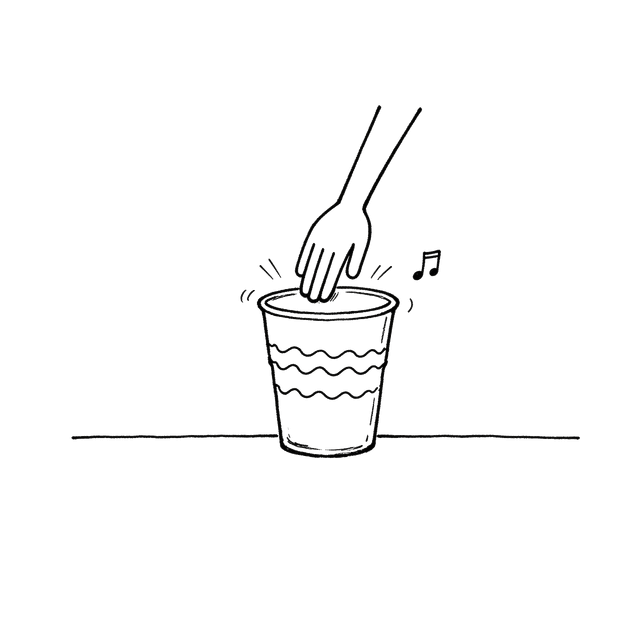
A rhythm activity that turns one plastic cup into a percussion instrument. Students learn the classic cup pattern - clap, tap the cup, move it, tap it on the hand and the table - and play it while saying a rhythm chant or singing. The cup's movements and sounds make the rhythm visible and touchable, helping students feel and "see" the beat. It trains steady beat, coordination, rhythm reading and ensemble playing.
Procedures
- 1
Give every student one plastic cup and place it upside down on the desk.
- 2
The teacher demonstrates the whole cup pattern slowly while the class watches.
- 3
Learn the pattern in pieces with a rhythm chant: clap clap - tap tap tap - clap - move the cup - clap - grab, hit, hit - switch, slap, down. Echo each piece after the teacher.
- 4
Put the whole pattern together, first slowly without music, then at a steady tempo.
- 5
Add the music and play the cup pattern with the song; try faster and slower tempos.
- 6
Students take turns leading the class, or create their own cup rhythm and teach it to others.
Variations
1. Play in a circle and pass the cup to the right on the last move - one big moving rhythm.
2. Play in canon: groups start one after another.
3. Change dynamics: play the pattern loud then soft, strong then gentle.
4. Try different cups and surfaces to explore different sounds and timbres.
5. Students compose their own eight-beat cup rhythm for the class to learn.
6. Turn one beat into a silent beat and keep it inside to train inner hearing.
Reference Video Link
Activity Preparation
One plastic cup per student, a desk or table, and a piece of music with a clear steady beat (or a rhythm chant).
Activity Sources
- Source Type:
- Website / Online resource
MAPS teaching activities may come from a variety of sources, including original contributions by the MAPS team, online resources, published materials, activities learned from teachers, activities shared by colleagues, traditional teaching practices, and other sources. When a source can be reasonably identified, we make every effort to acknowledge it on the relevant activity page or in the accompanying reference information.
Some content may be organized, translated, structured, or adapted by the MAPS team for specific teaching contexts. Such editorial or instructional adaptation does not mean that MAPS claims ownership of the underlying third-party material. Rights to third-party content remain with the original authors, publishers, or other lawful rights holders.
If you are an author, copyright holder, or authorized representative and have questions or concerns regarding the source, attribution, or use of any content, please contact us:
Email: musicactivityps@gmail.com
Cup Percussion
Summary
A rhythm activity that turns one plastic cup into a percussion instrument. Students learn the classic cup pattern - clap, tap the cup, move it, tap it on the hand and the table - and play it while saying a rhythm chant or singing. The cup's movements and sounds make the rhythm visible and touchable, helping students feel and "see" the beat. It trains steady beat, coordination, rhythm reading and ensemble playing.
Procedures
- 1
Give every student one plastic cup and place it upside down on the desk.
- 2
The teacher demonstrates the whole cup pattern slowly while the class watches.
- 3
Learn the pattern in pieces with a rhythm chant: clap clap - tap tap tap - clap - move the cup - clap - grab, hit, hit - switch, slap, down. Echo each piece after the teacher.
- 4
Put the whole pattern together, first slowly without music, then at a steady tempo.
- 5
Add the music and play the cup pattern with the song; try faster and slower tempos.
- 6
Students take turns leading the class, or create their own cup rhythm and teach it to others.
Variations
1. Play in a circle and pass the cup to the right on the last move - one big moving rhythm.
2. Play in canon: groups start one after another.
3. Change dynamics: play the pattern loud then soft, strong then gentle.
4. Try different cups and surfaces to explore different sounds and timbres.
5. Students compose their own eight-beat cup rhythm for the class to learn.
6. Turn one beat into a silent beat and keep it inside to train inner hearing.
Reference Video Link
Activity Preparation
One plastic cup per student, a desk or table, and a piece of music with a clear steady beat (or a rhythm chant).
Activity Sources
- Source Type:
- Website / Online resource
MAPS teaching activities may come from a variety of sources, including original contributions by the MAPS team, online resources, published materials, activities learned from teachers, activities shared by colleagues, traditional teaching practices, and other sources. When a source can be reasonably identified, we make every effort to acknowledge it on the relevant activity page or in the accompanying reference information.
Some content may be organized, translated, structured, or adapted by the MAPS team for specific teaching contexts. Such editorial or instructional adaptation does not mean that MAPS claims ownership of the underlying third-party material. Rights to third-party content remain with the original authors, publishers, or other lawful rights holders.
If you are an author, copyright holder, or authorized representative and have questions or concerns regarding the source, attribution, or use of any content, please contact us:
Email: musicactivityps@gmail.com