 MAPS
Fast and Slow Together
Summary
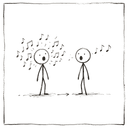
A part-singing game in which students sing the same song in different tempos simultaneously. After singing a familiar song at the original speed, then at half speed, then at double speed, two groups combine: one group sings at the original tempo while the other sings at half (or double) speed. The activity develops tempo control, independent part-holding, and listening for ensemble blend. Suitable for Grades 5-6; 3 or more players; 15-20 minutes.
Procedures
- 1
Sing the song together at the original tempo.
- 2
Sing it again at half speed.
- 3
Then try singing it at double speed.
- 4
Combine: one group sings at the original tempo while the other sings at half speed, simultaneously.
- 5
Now combine the original-tempo group with the double-speed group.
- 6
If you can do it without going wrong, you have succeeded!
Variations
1. Keep a steady beat while singing different tempos together - it makes it much easier.
2. Listen carefully to your own part and to how it blends with the other part.
3. Challenge the class to finish steps 1-3 quickly.
4. Add actions to the lyrics - it looks cooler and is easier to stay together.
Activity Preparation
A familiar song suitable for part work.
Activity Sources
- Source Type:
- Textbook / Book
- Source:
- Music Classroom Games: 53 Ways to Teach Music Well - Step One, activity Fast and Slow Together.
MAPS teaching activities may come from a variety of sources, including original contributions by the MAPS team, online resources, published materials, activities learned from teachers, activities shared by colleagues, traditional teaching practices, and other sources. When a source can be reasonably identified, we make every effort to acknowledge it on the relevant activity page or in the accompanying reference information.
Some content may be organized, translated, structured, or adapted by the MAPS team for specific teaching contexts. Such editorial or instructional adaptation does not mean that MAPS claims ownership of the underlying third-party material. Rights to third-party content remain with the original authors, publishers, or other lawful rights holders.
If you are an author, copyright holder, or authorized representative and have questions or concerns regarding the source, attribution, or use of any content, please contact us:
Email: musicactivityps@gmail.com
Fast and Slow Together
Summary
A part-singing game in which students sing the same song in different tempos simultaneously. After singing a familiar song at the original speed, then at half speed, then at double speed, two groups combine: one group sings at the original tempo while the other sings at half (or double) speed. The activity develops tempo control, independent part-holding, and listening for ensemble blend. Suitable for Grades 5-6; 3 or more players; 15-20 minutes.
Procedures
- 1
Sing the song together at the original tempo.
- 2
Sing it again at half speed.
- 3
Then try singing it at double speed.
- 4
Combine: one group sings at the original tempo while the other sings at half speed, simultaneously.
- 5
Now combine the original-tempo group with the double-speed group.
- 6
If you can do it without going wrong, you have succeeded!
Variations
1. Keep a steady beat while singing different tempos together - it makes it much easier.
2. Listen carefully to your own part and to how it blends with the other part.
3. Challenge the class to finish steps 1-3 quickly.
4. Add actions to the lyrics - it looks cooler and is easier to stay together.
Activity Preparation
A familiar song suitable for part work.
Activity Sources
- Source Type:
- Textbook / Book
- Source:
- Music Classroom Games: 53 Ways to Teach Music Well - Step One, activity Fast and Slow Together.
MAPS teaching activities may come from a variety of sources, including original contributions by the MAPS team, online resources, published materials, activities learned from teachers, activities shared by colleagues, traditional teaching practices, and other sources. When a source can be reasonably identified, we make every effort to acknowledge it on the relevant activity page or in the accompanying reference information.
Some content may be organized, translated, structured, or adapted by the MAPS team for specific teaching contexts. Such editorial or instructional adaptation does not mean that MAPS claims ownership of the underlying third-party material. Rights to third-party content remain with the original authors, publishers, or other lawful rights holders.
If you are an author, copyright holder, or authorized representative and have questions or concerns regarding the source, attribution, or use of any content, please contact us:
Email: musicactivityps@gmail.com