 MAPS
From Lead Sheet to Spanish Dance
Summary
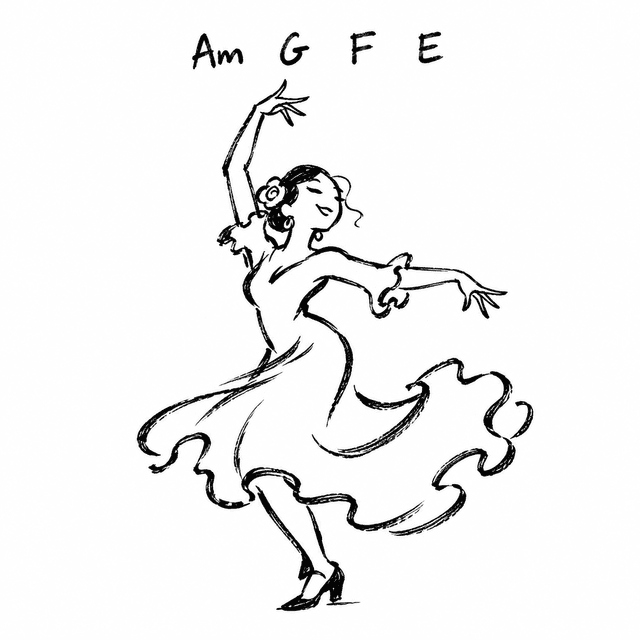
Students first observe a lead sheet to see how a melody and chord symbols are presented together. They then use a chord-tone diagram to identify and locate the notes of Am–G–F–E on the keyboard, practicing each chord as a blocked shape. Finally, students apply the provided Spanish dance rhythm to the chord progression, turning the chord symbols into a playable rhythmic pattern.
Procedures
- 1
Observe the lead sheet.
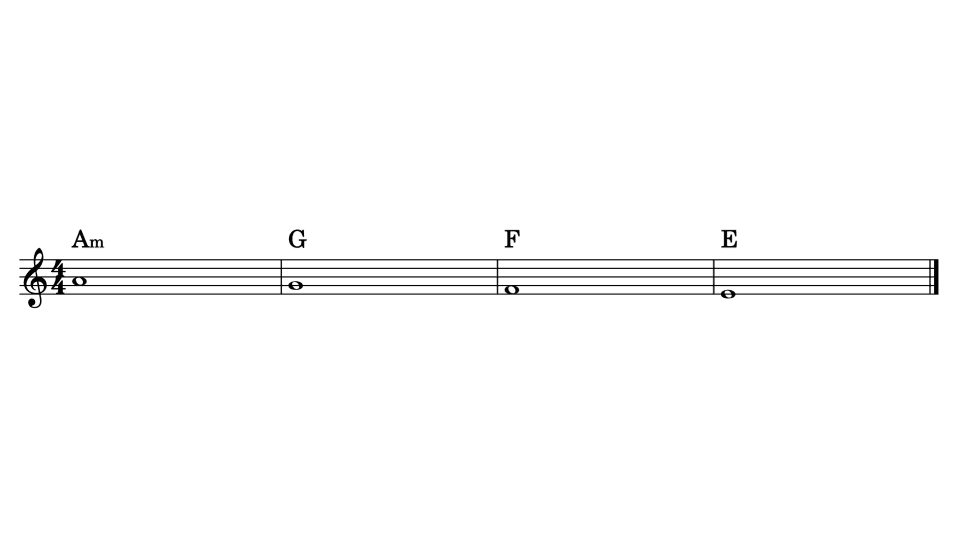
Show the lead sheet and invite students to observe its two elements: the melody and the chord symbols above it. Explain that chord symbols provide harmonic information but do not specify every note or rhythmic pattern to play.
- 2
Identify and locate the chord tones.
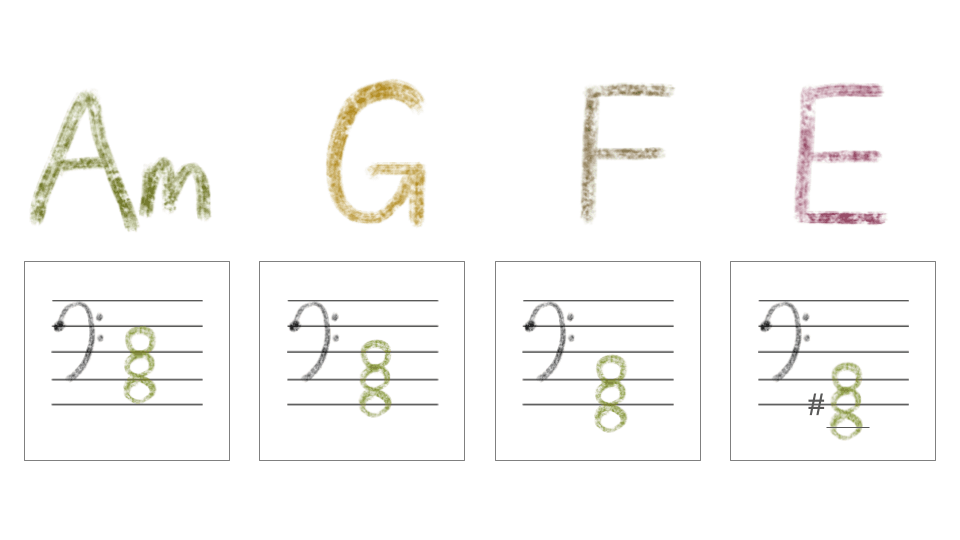
Show the chord-tone diagram for Am–G–F–E. Guide students to name the notes in each chord and find them on the keyboard. Students practice playing each chord as a blocked shape until they can locate the notes securely.
- 3
Introduce the Spanish dance rhythm.
Present the provided rhythmic pattern and practice it first on one familiar chord. Guide students to keep a steady pulse and notice how the rhythm creates the characteristic dance feeling.
- 4
Apply the rhythm to the progression.
Students play the Spanish dance rhythm through Am–G–F–E, changing chords at the indicated points. Repeat the progression until students can find each chord and maintain the rhythm independently.
Activity Preparation
1. A Spanish Dance lead sheet showing the melody and the Am–G–F–E chord symbols.
2. A reference sheet or slide showing the chord tones of Am, G, F, and E.
3. A teacher-selected Spanish dance rhythmic pattern or short rhythmic excerpt, projected or printed.
a. Specific rhythms may be selected from the following resource:
https://publish.iupress.indiana.edu/read/a-history-of-spanish-piano-music/section/a883e150-0970-4a70-adcf-657f3a4842a2
4. Piano or keyboard
5. Students should be familiar with basic major and minor triad shapes
Activity Sources
- Source Type:
- MAPS Original
MAPS teaching activities may come from a variety of sources, including original contributions by the MAPS team, online resources, published materials, activities learned from teachers, activities shared by colleagues, traditional teaching practices, and other sources. When a source can be reasonably identified, we make every effort to acknowledge it on the relevant activity page or in the accompanying reference information.
Some content may be organized, translated, structured, or adapted by the MAPS team for specific teaching contexts. Such editorial or instructional adaptation does not mean that MAPS claims ownership of the underlying third-party material. Rights to third-party content remain with the original authors, publishers, or other lawful rights holders.
If you are an author, copyright holder, or authorized representative and have questions or concerns regarding the source, attribution, or use of any content, please contact us:
Email: musicactivityps@gmail.com
From Lead Sheet to Spanish Dance
Summary
Students first observe a lead sheet to see how a melody and chord symbols are presented together. They then use a chord-tone diagram to identify and locate the notes of Am–G–F–E on the keyboard, practicing each chord as a blocked shape. Finally, students apply the provided Spanish dance rhythm to the chord progression, turning the chord symbols into a playable rhythmic pattern.
Procedures
- 1
Observe the lead sheet.
Show the lead sheet and invite students to observe its two elements: the melody and the chord symbols above it. Explain that chord symbols provide harmonic information but do not specify every note or rhythmic pattern to play.
- 2
Identify and locate the chord tones.
Show the chord-tone diagram for Am–G–F–E. Guide students to name the notes in each chord and find them on the keyboard. Students practice playing each chord as a blocked shape until they can locate the notes securely.
- 3
Introduce the Spanish dance rhythm.
Present the provided rhythmic pattern and practice it first on one familiar chord. Guide students to keep a steady pulse and notice how the rhythm creates the characteristic dance feeling.
- 4
Apply the rhythm to the progression.
Students play the Spanish dance rhythm through Am–G–F–E, changing chords at the indicated points. Repeat the progression until students can find each chord and maintain the rhythm independently.
Activity Preparation
1. A Spanish Dance lead sheet showing the melody and the Am–G–F–E chord symbols.
2. A reference sheet or slide showing the chord tones of Am, G, F, and E.
3. A teacher-selected Spanish dance rhythmic pattern or short rhythmic excerpt, projected or printed.
a. Specific rhythms may be selected from the following resource:
https://publish.iupress.indiana.edu/read/a-history-of-spanish-piano-music/section/a883e150-0970-4a70-adcf-657f3a4842a2
4. Piano or keyboard
5. Students should be familiar with basic major and minor triad shapes
Activity Sources
- Source Type:
- MAPS Original
MAPS teaching activities may come from a variety of sources, including original contributions by the MAPS team, online resources, published materials, activities learned from teachers, activities shared by colleagues, traditional teaching practices, and other sources. When a source can be reasonably identified, we make every effort to acknowledge it on the relevant activity page or in the accompanying reference information.
Some content may be organized, translated, structured, or adapted by the MAPS team for specific teaching contexts. Such editorial or instructional adaptation does not mean that MAPS claims ownership of the underlying third-party material. Rights to third-party content remain with the original authors, publishers, or other lawful rights holders.
If you are an author, copyright holder, or authorized representative and have questions or concerns regarding the source, attribution, or use of any content, please contact us:
Email: musicactivityps@gmail.com