MAPS
From Motif to Music with Suno AI
Summary
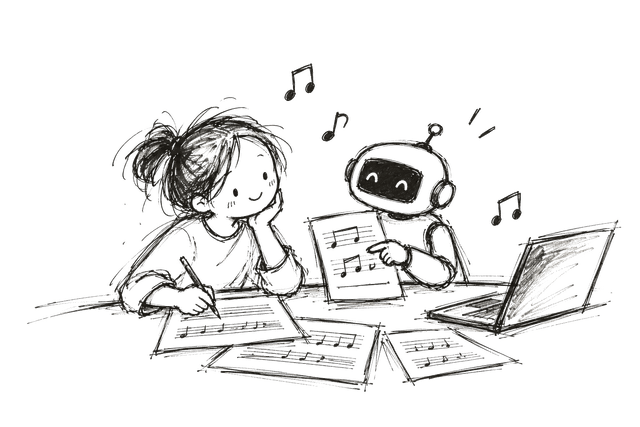
A class composition activity in which students create a short original motif, perform or sing and record it, and then use Suno AI to expand the idea into a longer piece. Students compare the generated version with their original material, make further creative decisions, and reflect on how human and AI contributions shaped the final result.
Procedures
- 1
The teacher provides a short musical idea, such as a one- to two-measure melody, rhythmic pattern, or simple harmonic framework. Students use this material as a starting point and expand it into a four- to eight-measure passage. In developing the material, students may choose to modify or elaborate on the following musical elements:
a. Rhythm: alter the original rhythmic pattern or increase or decrease rhythmic density; b. Pitch / Melody: change selected pitches or the melodic contour, or develop the idea through repetition, sequence, or similar techniques; c. Register: move the material into a different register; d. Left-Hand Accompaniment: add block chords, broken chords, or another simple accompaniment pattern; e. Texture: develop a single melodic line into melody with accompaniment, or change the layering of the musical material; f. Dynamics and Articulation: use changes in dynamics, legato, staccato, or other articulations to shape the musical character.
- 2
Perform or Sing and Record. Students present the motif by playing it on the piano or singing it, then record a clear audio version that preserves their original melody and rhythm.
- 3
Plan the Musical Direction. Before using AI, students decide how they want the piece to develop by choosing elements such as mood, style, tempo, instrumentation, and overall character, and summarize these choices in a short prompt.
- 4
Expand the Motif with Suno AI. Students upload or record their original audio in Suno and use their prompt to extend or develop the motif into a longer piece. Students should use only material they created themselves or have permission to use.
- 5
Compare the Original and AI Version. Students listen to their original motif and the generated version side by side, identifying what was retained, what changed, and whether the original idea remains recognizable.
- 6
Revise and Generate Again. Students choose one musical element to improve, such as instrumentation, texture, mood, or pacing, revise the prompt or original material, and create a second version.
- 7
Share and Listen for the Motif. Students present their original motif followed by one AI-expanded version. Classmates listen for where and how the original idea appears or changes in the longer piece.
- 8
Reflect on the Creative Process. Students briefly discuss: What musical decisions did I make? What did the AI appear to add or change? Which parts would I keep, revise, or rewrite myself?
Variations
1. Easier: Provide a short rhythmic framework, or five-finger pattern so students can focus on creating one clear motif.
2. Easier: Students work in pairs to compose, record, and design the prompt together.
3. More challenging: Require students to create two contrasting Suno versions from the same motif and explain how different prompts changed the musical outcome.
4. More challenging: Ask students to revise the original motif itself after listening to the AI version, then compare the new human revision with the AI-generated development.
Activity Preparation
1.Students should have basic experience creating short melodies and be able to perform or sing a simple original idea.
2.Prepare a piano or keyboard, a recording device, internet-enabled devices, and access to Suno.
3.The teacher should demonstrate the workflow in advance and ensure students upload only original or authorized material.
Suno is currently a 13+ service; students under 18 must use it with the consent required by Suno’s Terms of Service and applicable school policy.
Activity Sources
- Source Type:
- MAPS Original
MAPS teaching activities may come from a variety of sources, including original contributions by the MAPS team, online resources, published materials, activities learned from teachers, activities shared by colleagues, traditional teaching practices, and other sources. When a source can be reasonably identified, we make every effort to acknowledge it on the relevant activity page or in the accompanying reference information.
Some content may be organized, translated, structured, or adapted by the MAPS team for specific teaching contexts. Such editorial or instructional adaptation does not mean that MAPS claims ownership of the underlying third-party material. Rights to third-party content remain with the original authors, publishers, or other lawful rights holders.
If you are an author, copyright holder, or authorized representative and have questions or concerns regarding the source, attribution, or use of any content, please contact us:
Email: musicactivityps@gmail.com
From Motif to Music with Suno AI
Summary
A class composition activity in which students create a short original motif, perform or sing and record it, and then use Suno AI to expand the idea into a longer piece. Students compare the generated version with their original material, make further creative decisions, and reflect on how human and AI contributions shaped the final result.
Procedures
- 1
The teacher provides a short musical idea, such as a one- to two-measure melody, rhythmic pattern, or simple harmonic framework. Students use this material as a starting point and expand it into a four- to eight-measure passage. In developing the material, students may choose to modify or elaborate on the following musical elements:
a. Rhythm: alter the original rhythmic pattern or increase or decrease rhythmic density; b. Pitch / Melody: change selected pitches or the melodic contour, or develop the idea through repetition, sequence, or similar techniques; c. Register: move the material into a different register; d. Left-Hand Accompaniment: add block chords, broken chords, or another simple accompaniment pattern; e. Texture: develop a single melodic line into melody with accompaniment, or change the layering of the musical material; f. Dynamics and Articulation: use changes in dynamics, legato, staccato, or other articulations to shape the musical character.
- 2
Perform or Sing and Record. Students present the motif by playing it on the piano or singing it, then record a clear audio version that preserves their original melody and rhythm.
- 3
Plan the Musical Direction. Before using AI, students decide how they want the piece to develop by choosing elements such as mood, style, tempo, instrumentation, and overall character, and summarize these choices in a short prompt.
- 4
Expand the Motif with Suno AI. Students upload or record their original audio in Suno and use their prompt to extend or develop the motif into a longer piece. Students should use only material they created themselves or have permission to use.
- 5
Compare the Original and AI Version. Students listen to their original motif and the generated version side by side, identifying what was retained, what changed, and whether the original idea remains recognizable.
- 6
Revise and Generate Again. Students choose one musical element to improve, such as instrumentation, texture, mood, or pacing, revise the prompt or original material, and create a second version.
- 7
Share and Listen for the Motif. Students present their original motif followed by one AI-expanded version. Classmates listen for where and how the original idea appears or changes in the longer piece.
- 8
Reflect on the Creative Process. Students briefly discuss: What musical decisions did I make? What did the AI appear to add or change? Which parts would I keep, revise, or rewrite myself?
Variations
1. Easier: Provide a short rhythmic framework, or five-finger pattern so students can focus on creating one clear motif.
2. Easier: Students work in pairs to compose, record, and design the prompt together.
3. More challenging: Require students to create two contrasting Suno versions from the same motif and explain how different prompts changed the musical outcome.
4. More challenging: Ask students to revise the original motif itself after listening to the AI version, then compare the new human revision with the AI-generated development.
Activity Preparation
1.Students should have basic experience creating short melodies and be able to perform or sing a simple original idea.
2.Prepare a piano or keyboard, a recording device, internet-enabled devices, and access to Suno.
3.The teacher should demonstrate the workflow in advance and ensure students upload only original or authorized material.
Suno is currently a 13+ service; students under 18 must use it with the consent required by Suno’s Terms of Service and applicable school policy.
Activity Sources
- Source Type:
- MAPS Original
MAPS teaching activities may come from a variety of sources, including original contributions by the MAPS team, online resources, published materials, activities learned from teachers, activities shared by colleagues, traditional teaching practices, and other sources. When a source can be reasonably identified, we make every effort to acknowledge it on the relevant activity page or in the accompanying reference information.
Some content may be organized, translated, structured, or adapted by the MAPS team for specific teaching contexts. Such editorial or instructional adaptation does not mean that MAPS claims ownership of the underlying third-party material. Rights to third-party content remain with the original authors, publishers, or other lawful rights holders.
If you are an author, copyright holder, or authorized representative and have questions or concerns regarding the source, attribution, or use of any content, please contact us:
Email: musicactivityps@gmail.com