 MAPS
Group Walk

Summary
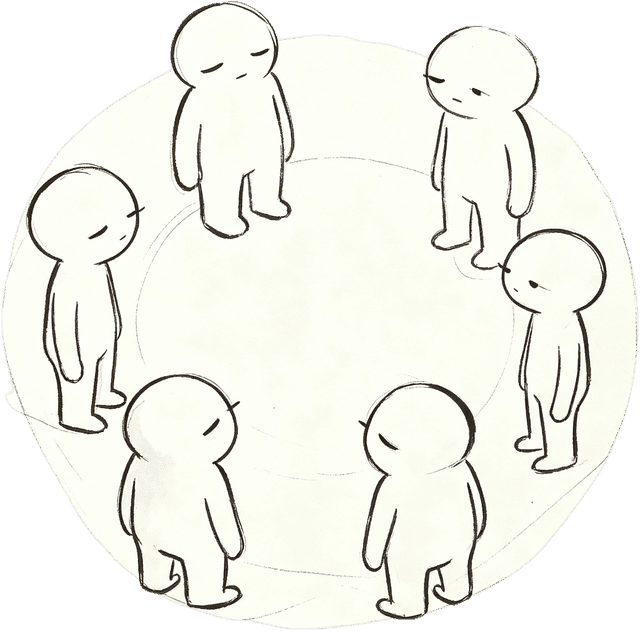
The whole group walks freely around the room — nobody leads, nobody calls — and together, to unite the group walks like one person, jogs, slows down and stops all together, purely by watching and sensing each other.
Procedures
- 1
Find a spot to sit down. Each student finds their own position. The teacher highlights key points: this game tests attention span, observational skills, and the ability to imitate; “during the entire process, you should focus not only on yourself but also on the entire team.”
- 2
Mastering Four States: The teacher demonstrates four states of the game—standing up and walking, jogging, walking at a slower pace, and stopping. No one calls out commands or gives signals; no one dictates when to transition. The transition is “shared” by the entire team as one unit. To practice these movements, the teacher first calls out the commands and has everyone rehearse the four states once.
- 3
Standing and Walking: The entire class stands up simultaneously and begins to walk freely, covering the entire space and utilizing every corner.
- 4
Team-Based Transition: No talking or gesturing is allowed. The team begins to transition—someone starts jogging first; others sense this, follow suit; then the entire team slows down together; finally, they stop together. Each transition must be completed collectively by the whole team. If the team splits into two different speeds, everyone relaxes, restarts, and tries again.
- 5
Stop and Start Simultaneously Challenge: The team attempts the most challenging version—can the entire team come to a complete stop at exactly the same moment, then start again at exactly the same moment, without any individual clearly taking the lead. Then, the team sits down for a discussion: Who do you think slowed down first? What did you notice—shoulders, footsteps, breathing?
- 6
Conclusion: Finally, tie the game to the music—within the choral and ensemble settings, we once again breathe together, begin together, and slow down together, all without any verbal cues, relying instead on listening and observation, just as we did during the previous group walk.
Reference Video Link
Activity Sources
- Source Type:
- Website / Online resource
- Source:
- from Drama Menu
MAPS teaching activities may come from a variety of sources, including original contributions by the MAPS team, online resources, published materials, activities learned from teachers, activities shared by colleagues, traditional teaching practices, and other sources. When a source can be reasonably identified, we make every effort to acknowledge it on the relevant activity page or in the accompanying reference information.
Some content may be organized, translated, structured, or adapted by the MAPS team for specific teaching contexts. Such editorial or instructional adaptation does not mean that MAPS claims ownership of the underlying third-party material. Rights to third-party content remain with the original authors, publishers, or other lawful rights holders.
If you are an author, copyright holder, or authorized representative and have questions or concerns regarding the source, attribution, or use of any content, please contact us:
Email: musicactivityps@gmail.com
Group Walk
Summary
The whole group walks freely around the room — nobody leads, nobody calls — and together, to unite the group walks like one person, jogs, slows down and stops all together, purely by watching and sensing each other.
Procedures
- 1
Find a spot to sit down. Each student finds their own position. The teacher highlights key points: this game tests attention span, observational skills, and the ability to imitate; “during the entire process, you should focus not only on yourself but also on the entire team.”
- 2
Mastering Four States: The teacher demonstrates four states of the game—standing up and walking, jogging, walking at a slower pace, and stopping. No one calls out commands or gives signals; no one dictates when to transition. The transition is “shared” by the entire team as one unit. To practice these movements, the teacher first calls out the commands and has everyone rehearse the four states once.
- 3
Standing and Walking: The entire class stands up simultaneously and begins to walk freely, covering the entire space and utilizing every corner.
- 4
Team-Based Transition: No talking or gesturing is allowed. The team begins to transition—someone starts jogging first; others sense this, follow suit; then the entire team slows down together; finally, they stop together. Each transition must be completed collectively by the whole team. If the team splits into two different speeds, everyone relaxes, restarts, and tries again.
- 5
Stop and Start Simultaneously Challenge: The team attempts the most challenging version—can the entire team come to a complete stop at exactly the same moment, then start again at exactly the same moment, without any individual clearly taking the lead. Then, the team sits down for a discussion: Who do you think slowed down first? What did you notice—shoulders, footsteps, breathing?
- 6
Conclusion: Finally, tie the game to the music—within the choral and ensemble settings, we once again breathe together, begin together, and slow down together, all without any verbal cues, relying instead on listening and observation, just as we did during the previous group walk.
Reference Video Link
Activity Sources
- Source Type:
- Website / Online resource
- Source:
- from Drama Menu
MAPS teaching activities may come from a variety of sources, including original contributions by the MAPS team, online resources, published materials, activities learned from teachers, activities shared by colleagues, traditional teaching practices, and other sources. When a source can be reasonably identified, we make every effort to acknowledge it on the relevant activity page or in the accompanying reference information.
Some content may be organized, translated, structured, or adapted by the MAPS team for specific teaching contexts. Such editorial or instructional adaptation does not mean that MAPS claims ownership of the underlying third-party material. Rights to third-party content remain with the original authors, publishers, or other lawful rights holders.
If you are an author, copyright holder, or authorized representative and have questions or concerns regarding the source, attribution, or use of any content, please contact us:
Email: musicactivityps@gmail.com