 MAPS
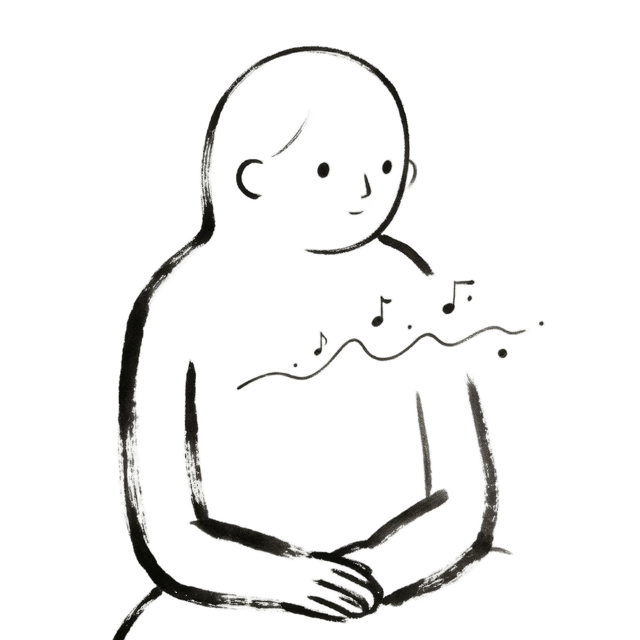
Hear It Inside
Summary
Through "vanishing sound" games students continue melodies inwardly and chain-sing silently, then sort interval and chord colours with expression cards and verify by solo singing—readiness for accurate choral entries.
Procedures
- 1
Sing phrase one aloud; phrase two silently with hand signs.
- 2
“Vanishing sound”: the piano stops mid-piece—students continue inwardly and then check aloud.
- 3
Name the skill: playing music in your mind is the prerequisite for accurate singing.
- 4
Hear bright do–mi vs. mild do–fa; raise expression cards.
- 5
In teams, classify intervals as bright, mild, or tense.
- 6
Silent relay: one group silently sings a phrase; the next reveals and checks the final pitch.
- 7
Solo check: sing back two notes and name the solfège.
- 8
Summarise how inner hearing aids choral "ready-and-enter" work.
Variations
1. Classroom Management: Every student has an expression-card set on the desk; one quiet gesture unifies start/stop.
2. Difficulty Adjustments: Easier—only do–so and do–mi; harder—hear the overall colour of triads.
3. Extensions: Sight-sing new material silently first; build intervals with hand signs before singing aloud.
Activity Preparation
Song sheet, expression cards, piano.
Activity Sources
- Source Type:
- Website / Online resource
- Source:
- https://www.dqjjh.com/news/news-detail-517356.htm Referenced: Kodály expert Lánczky Edit's silent-singing drills, gestures-replace-pitch inner-hearing training, and gesture-with-humming melody teaching.
- Adaptation Notes:
- Synthesised from a public Kodály workshop report; reorganised into whole-group / team / solo silent-singing and interval-colour drills.
MAPS teaching activities may come from a variety of sources, including original contributions by the MAPS team, online resources, published materials, activities learned from teachers, activities shared by colleagues, traditional teaching practices, and other sources. When a source can be reasonably identified, we make every effort to acknowledge it on the relevant activity page or in the accompanying reference information.
Some content may be organized, translated, structured, or adapted by the MAPS team for specific teaching contexts. Such editorial or instructional adaptation does not mean that MAPS claims ownership of the underlying third-party material. Rights to third-party content remain with the original authors, publishers, or other lawful rights holders.
If you are an author, copyright holder, or authorized representative and have questions or concerns regarding the source, attribution, or use of any content, please contact us:
Email: musicactivityps@gmail.com
Hear It Inside
Summary
Through "vanishing sound" games students continue melodies inwardly and chain-sing silently, then sort interval and chord colours with expression cards and verify by solo singing—readiness for accurate choral entries.
Procedures
- 1
Sing phrase one aloud; phrase two silently with hand signs.
- 2
“Vanishing sound”: the piano stops mid-piece—students continue inwardly and then check aloud.
- 3
Name the skill: playing music in your mind is the prerequisite for accurate singing.
- 4
Hear bright do–mi vs. mild do–fa; raise expression cards.
- 5
In teams, classify intervals as bright, mild, or tense.
- 6
Silent relay: one group silently sings a phrase; the next reveals and checks the final pitch.
- 7
Solo check: sing back two notes and name the solfège.
- 8
Summarise how inner hearing aids choral "ready-and-enter" work.
Variations
1. Classroom Management: Every student has an expression-card set on the desk; one quiet gesture unifies start/stop.
2. Difficulty Adjustments: Easier—only do–so and do–mi; harder—hear the overall colour of triads.
3. Extensions: Sight-sing new material silently first; build intervals with hand signs before singing aloud.
Activity Preparation
Song sheet, expression cards, piano.
Activity Sources
- Source Type:
- Website / Online resource
- Source:
- https://www.dqjjh.com/news/news-detail-517356.htm Referenced: Kodály expert Lánczky Edit's silent-singing drills, gestures-replace-pitch inner-hearing training, and gesture-with-humming melody teaching.
- Adaptation Notes:
- Synthesised from a public Kodály workshop report; reorganised into whole-group / team / solo silent-singing and interval-colour drills.
MAPS teaching activities may come from a variety of sources, including original contributions by the MAPS team, online resources, published materials, activities learned from teachers, activities shared by colleagues, traditional teaching practices, and other sources. When a source can be reasonably identified, we make every effort to acknowledge it on the relevant activity page or in the accompanying reference information.
Some content may be organized, translated, structured, or adapted by the MAPS team for specific teaching contexts. Such editorial or instructional adaptation does not mean that MAPS claims ownership of the underlying third-party material. Rights to third-party content remain with the original authors, publishers, or other lawful rights holders.
If you are an author, copyright holder, or authorized representative and have questions or concerns regarding the source, attribution, or use of any content, please contact us:
Email: musicactivityps@gmail.com