 MAPS
Ice-breaking activity: Close your eyes and rediscover your team
Summary
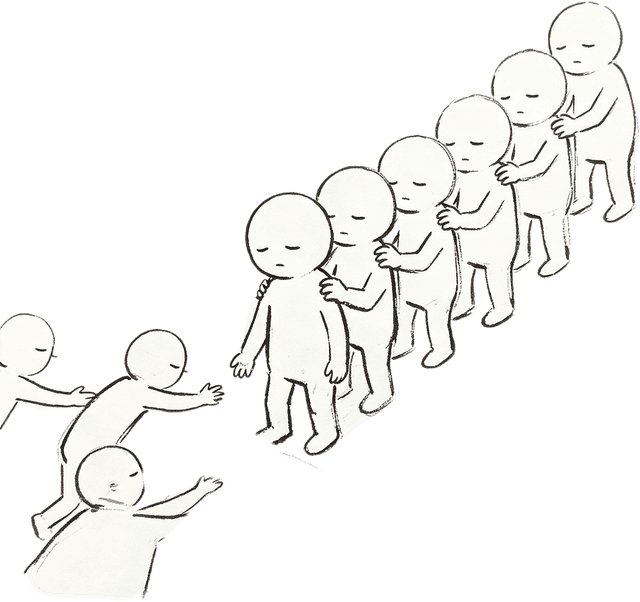
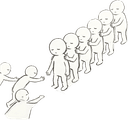
Students stand in a column with hands on the shoulders in front of them, memorize their place, then scatter across the room. On the teacher's signal they freeze and close their eyes, and each group must re-form its original column from memory and touch alone — the fastest group wins. In the music classroom the teacher drives the game with a hand drum pulse, so every move happens on a steady beat.
Procedures
- 1
Forming a Line and Memory (4 minutes): Divide the entire class into two groups (or three or more groups if there are too many students), with each group standing in a vertical line. Each student places both hands on the shoulders of the student in front of them, gently presses down on their shoulders, and then silently recalls their position: "I am in the ___ spot?"
- 2
Learning to Follow the Drum Beat (2 minutes): The teacher uses a hand drum to establish a steady beat. When the drum sounds continuously = move freely within the space; when the drum stops = freeze in place; when the drum is struck twice in quick succession = close your eyes and remain still. The entire class first opens their eyes and rehearses the three signals: "Move — Stop — Close Eyes."
- 3
Spreading and moving (2 minutes): The teacher calls out "Spread out" Everyone opens their eyes, leaves the formation, and walks across the entire space following the drum beat — utilizing the full area, remaining silent, and keeping their footsteps light. After about ten seconds, the drum stops: everyone freezes in place, then the drum is struck twice in quick succession — and everyone closes their eyes.
- 4
Closing Eyes and Returning to Position (4 minutes): With their eyes closed, each group uses their memory and coordination to walk back to their original vertical line, arranging themselves in their original order. The teacher reminds them of three safety rules: walk slowly while following the drum beat; do not reach out; and use their ears — each group may softly call out their team name. When every line has re-established its shoulder connections and the front person has raised their hand, this round ends.
- 5
Checking and Reveal (2 minutes): Everyone opens their eyes. Each line checks internally — is the order still the same as before? The group that completes the return to position the fastest wins.
- 6
Second Round and Conclusion (3 minutes): The two groups swap two members and play another round of "Team Memory" to assess their progress. Final summary: In choral and ensemble performances, we similarly rely on our hearing to find our place — listening to the beat, listening to the person beside us, and listening to the overall sound, just as we did when closing our eyes earlier.
Variations
1. Classroom Management: clear the floor of bags and chairs first and set two boundary lines so nobody drifts out; the safe-walk rule is repeated before every round — slow feet, no running with eyes closed; a sighted "gatekeeper" student may stand beside each group to watch for collisions.
2. Difficulty Adjustments: Easier—shorter columns of four or five, eyes-closed time kept to a few seconds, and one designated leader per group who may whisper directions; harder—reverse the order on re-formation (last becomes first), allow no team-name calls, or have the teacher silently change one starting spot so groups must re-negotiate.
3. Extensions: add a body-percussion layer — each column claps its own four-beat pattern after re-forming so groups can also find each other by rhythm; link the game to ensemble listening by having students walk on the drum pulse and stop exactly with the final accent; or use it as a term-opening ice breaker and let students invent the next round's rules.
Reference Video Link
Activity Sources
- Source Type:
- Website / Online resource
- Source:
- from Drama Menu
MAPS teaching activities may come from a variety of sources, including original contributions by the MAPS team, online resources, published materials, activities learned from teachers, activities shared by colleagues, traditional teaching practices, and other sources. When a source can be reasonably identified, we make every effort to acknowledge it on the relevant activity page or in the accompanying reference information.
Some content may be organized, translated, structured, or adapted by the MAPS team for specific teaching contexts. Such editorial or instructional adaptation does not mean that MAPS claims ownership of the underlying third-party material. Rights to third-party content remain with the original authors, publishers, or other lawful rights holders.
If you are an author, copyright holder, or authorized representative and have questions or concerns regarding the source, attribution, or use of any content, please contact us:
Email: musicactivityps@gmail.com
Ice-breaking activity: Close your eyes and rediscover your team
Summary
Students stand in a column with hands on the shoulders in front of them, memorize their place, then scatter across the room. On the teacher's signal they freeze and close their eyes, and each group must re-form its original column from memory and touch alone — the fastest group wins. In the music classroom the teacher drives the game with a hand drum pulse, so every move happens on a steady beat.
Procedures
- 1
Forming a Line and Memory (4 minutes): Divide the entire class into two groups (or three or more groups if there are too many students), with each group standing in a vertical line. Each student places both hands on the shoulders of the student in front of them, gently presses down on their shoulders, and then silently recalls their position: "I am in the ___ spot?"
- 2
Learning to Follow the Drum Beat (2 minutes): The teacher uses a hand drum to establish a steady beat. When the drum sounds continuously = move freely within the space; when the drum stops = freeze in place; when the drum is struck twice in quick succession = close your eyes and remain still. The entire class first opens their eyes and rehearses the three signals: "Move — Stop — Close Eyes."
- 3
Spreading and moving (2 minutes): The teacher calls out "Spread out" Everyone opens their eyes, leaves the formation, and walks across the entire space following the drum beat — utilizing the full area, remaining silent, and keeping their footsteps light. After about ten seconds, the drum stops: everyone freezes in place, then the drum is struck twice in quick succession — and everyone closes their eyes.
- 4
Closing Eyes and Returning to Position (4 minutes): With their eyes closed, each group uses their memory and coordination to walk back to their original vertical line, arranging themselves in their original order. The teacher reminds them of three safety rules: walk slowly while following the drum beat; do not reach out; and use their ears — each group may softly call out their team name. When every line has re-established its shoulder connections and the front person has raised their hand, this round ends.
- 5
Checking and Reveal (2 minutes): Everyone opens their eyes. Each line checks internally — is the order still the same as before? The group that completes the return to position the fastest wins.
- 6
Second Round and Conclusion (3 minutes): The two groups swap two members and play another round of "Team Memory" to assess their progress. Final summary: In choral and ensemble performances, we similarly rely on our hearing to find our place — listening to the beat, listening to the person beside us, and listening to the overall sound, just as we did when closing our eyes earlier.
Variations
1. Classroom Management: clear the floor of bags and chairs first and set two boundary lines so nobody drifts out; the safe-walk rule is repeated before every round — slow feet, no running with eyes closed; a sighted "gatekeeper" student may stand beside each group to watch for collisions.
2. Difficulty Adjustments: Easier—shorter columns of four or five, eyes-closed time kept to a few seconds, and one designated leader per group who may whisper directions; harder—reverse the order on re-formation (last becomes first), allow no team-name calls, or have the teacher silently change one starting spot so groups must re-negotiate.
3. Extensions: add a body-percussion layer — each column claps its own four-beat pattern after re-forming so groups can also find each other by rhythm; link the game to ensemble listening by having students walk on the drum pulse and stop exactly with the final accent; or use it as a term-opening ice breaker and let students invent the next round's rules.
Reference Video Link
Activity Sources
- Source Type:
- Website / Online resource
- Source:
- from Drama Menu
MAPS teaching activities may come from a variety of sources, including original contributions by the MAPS team, online resources, published materials, activities learned from teachers, activities shared by colleagues, traditional teaching practices, and other sources. When a source can be reasonably identified, we make every effort to acknowledge it on the relevant activity page or in the accompanying reference information.
Some content may be organized, translated, structured, or adapted by the MAPS team for specific teaching contexts. Such editorial or instructional adaptation does not mean that MAPS claims ownership of the underlying third-party material. Rights to third-party content remain with the original authors, publishers, or other lawful rights holders.
If you are an author, copyright holder, or authorized representative and have questions or concerns regarding the source, attribution, or use of any content, please contact us:
Email: musicactivityps@gmail.com