 MAPS
Listen to music and imagine a story
Summary
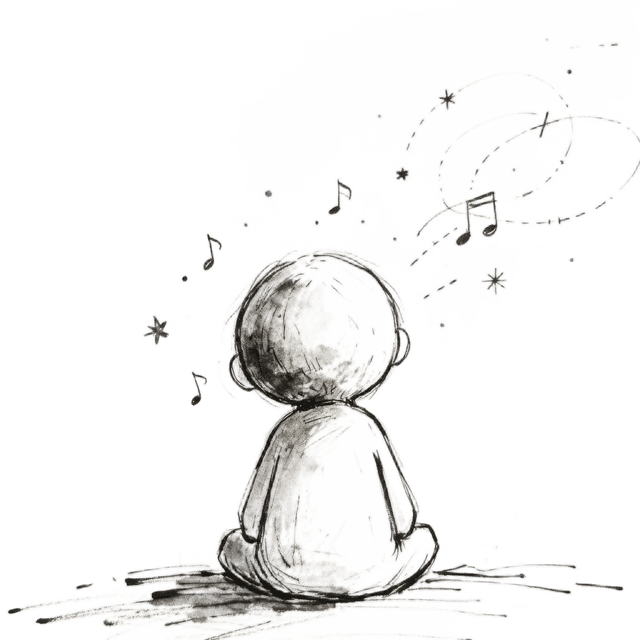
Students close their eyes and listen to traditional Chinese music, imagining possible scenes, characters, or stories based on the sounds and changes they hear. After listening, students share their interpretations and explain which musical cues supported their ideas. The activity develops focused listening, musical interpretation, and creative expression. It can be used as an experiential activity before introducing new content or as a creative extension at the end of a lesson
Procedures
- 1
The teacher plays a piece of traditional Chinese music without first discussing its title or background.
- 2
Students close their eyes and listen quietly, imagining what the music might be depicting.
- 3
The teacher may prompt students to consider:
a. What place or setting do you imagine? b. What might be happening in the story? c. Are there any people, animals, or natural scenes? d. When the music changes, does the story you imagine change as well?
- 4
After the music ends, students briefly describe the scene or story they imagined.
- 5
Invite several students to share their ideas and discuss why different students may imagine different things from the same piece of music.
- 6
The teacher may play the music again and ask students to listen for musical cues that support their imagined stories.
Variations
For younger students or students doing the activity for the first time, ask them to describe only one image, character, or emotion. More advanced students can develop a more complete story with a clear sequence of events.
Students can also write a short story based on what they imagined while listening, or create a drawing that represents the musical scene they heard.
Activity Sources
- Source Type:
- Website / Online resource
- Source:
- This activity was adapted from the elementary music lesson plan “Chinese Instruments” by the Kennedy Center, specifically the section in which students listen to traditional Chinese melodies and imagine the stories conveyed by the music. It was rewritten during the documentation process as a standalone classroom activity that can be implemented independently. https://www.kennedy-center.org/education/resources-for-educators/classroom-resources/lessons-and-activities/lessons/3-5/chinese-instruments/
MAPS teaching activities may come from a variety of sources, including original contributions by the MAPS team, online resources, published materials, activities learned from teachers, activities shared by colleagues, traditional teaching practices, and other sources. When a source can be reasonably identified, we make every effort to acknowledge it on the relevant activity page or in the accompanying reference information.
Some content may be organized, translated, structured, or adapted by the MAPS team for specific teaching contexts. Such editorial or instructional adaptation does not mean that MAPS claims ownership of the underlying third-party material. Rights to third-party content remain with the original authors, publishers, or other lawful rights holders.
If you are an author, copyright holder, or authorized representative and have questions or concerns regarding the source, attribution, or use of any content, please contact us:
Email: musicactivityps@gmail.com
Listen to music and imagine a story
Summary
Students close their eyes and listen to traditional Chinese music, imagining possible scenes, characters, or stories based on the sounds and changes they hear. After listening, students share their interpretations and explain which musical cues supported their ideas. The activity develops focused listening, musical interpretation, and creative expression. It can be used as an experiential activity before introducing new content or as a creative extension at the end of a lesson
Procedures
- 1
The teacher plays a piece of traditional Chinese music without first discussing its title or background.
- 2
Students close their eyes and listen quietly, imagining what the music might be depicting.
- 3
The teacher may prompt students to consider:
a. What place or setting do you imagine? b. What might be happening in the story? c. Are there any people, animals, or natural scenes? d. When the music changes, does the story you imagine change as well?
- 4
After the music ends, students briefly describe the scene or story they imagined.
- 5
Invite several students to share their ideas and discuss why different students may imagine different things from the same piece of music.
- 6
The teacher may play the music again and ask students to listen for musical cues that support their imagined stories.
Variations
For younger students or students doing the activity for the first time, ask them to describe only one image, character, or emotion. More advanced students can develop a more complete story with a clear sequence of events.
Students can also write a short story based on what they imagined while listening, or create a drawing that represents the musical scene they heard.
Activity Sources
- Source Type:
- Website / Online resource
- Source:
- This activity was adapted from the elementary music lesson plan “Chinese Instruments” by the Kennedy Center, specifically the section in which students listen to traditional Chinese melodies and imagine the stories conveyed by the music. It was rewritten during the documentation process as a standalone classroom activity that can be implemented independently. https://www.kennedy-center.org/education/resources-for-educators/classroom-resources/lessons-and-activities/lessons/3-5/chinese-instruments/
MAPS teaching activities may come from a variety of sources, including original contributions by the MAPS team, online resources, published materials, activities learned from teachers, activities shared by colleagues, traditional teaching practices, and other sources. When a source can be reasonably identified, we make every effort to acknowledge it on the relevant activity page or in the accompanying reference information.
Some content may be organized, translated, structured, or adapted by the MAPS team for specific teaching contexts. Such editorial or instructional adaptation does not mean that MAPS claims ownership of the underlying third-party material. Rights to third-party content remain with the original authors, publishers, or other lawful rights holders.
If you are an author, copyright holder, or authorized representative and have questions or concerns regarding the source, attribution, or use of any content, please contact us:
Email: musicactivityps@gmail.com