 MAPS
Long Fingers Find Black Keys
Summary
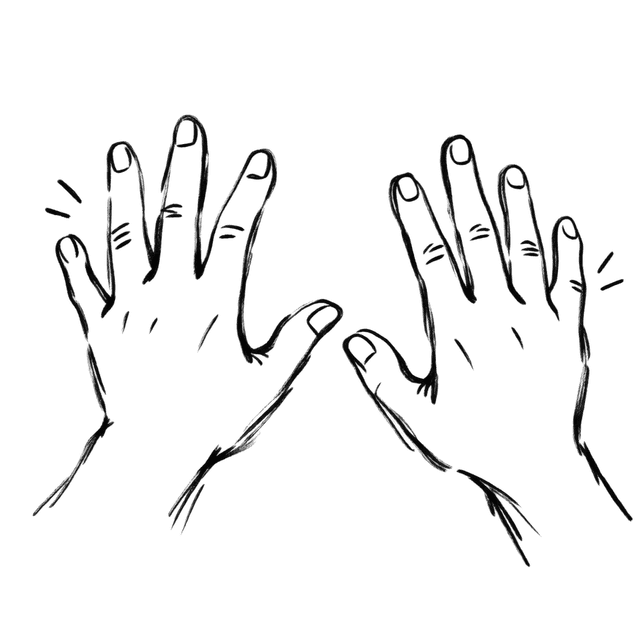
Students explore how finger length relates to the physical layout of black and white keys. Beginning with the idea that fingers 2, 3, and 4 are relatively longer than fingers 1 and 5, students examine how keyboard topography influences scale fingering. Through guided analysis of B major and E♭ major, they observe how longer fingers often fall naturally on black keys and discover that scales do not always begin with the thumb. Students then apply this understanding to a scale of their choice, learning to recognize “long fingers on black keys” as a useful fingering principle rather than an absolute rule.
Procedures
- 1
Identify long and short fingers.
Have students observe their hands and compare finger lengths. Identify fingers 2, 3, and 4 as the relatively longer fingers and fingers 1 and 5 as the shorter fingers. Ask which fingers can reach the raised black keys more naturally, and introduce the guiding idea: “Long fingers find black keys.”
- 2
Analyze B major.
Write or display the B-major scale and identify its black and white keys before adding fingering. Then examine the standard fingering for each hand. Guide students to notice that the longer fingers frequently fall on the black keys, while the thumb is placed on white keys such as B and E. Use this scale to establish the relationship between finger length, black-key placement, and scale fingering.
- 3
Apply the idea to E-flat major.
Increase the challenge with E-flat major, a scale that begins on a black key. Before showing the fingering, ask students to predict which finger should begin the scale and where the longer fingers may be placed. Compare their predictions with the standard fingering and discuss how the black-key pattern helps organize the fingering. Emphasize that a scale does not always begin with the thumb and that “long fingers find black keys” is a guiding pattern rather than an absolute rule.
- 4
Choose, analyze, and explain.
Invite individual students or small groups to choose another major or minor scale. Students identify the black-key pattern, examine or predict the fingering, and explain how the fingering relates to the physical layout of the keyboard. Ask them to present their reasoning to the class, with particular attention to the idea that longer fingers often naturally accommodate black keys.
Variations
Give students a new scale without fingering. Ask them to use the black-key pattern and the idea “Long fingers find black keys” to predict a possible fingering, then compare it with the standard fingering and discuss any exceptions.
Activity Preparation
1. Piano or keyboard
2. Selected scale examples with fingering
Activity Sources
- Source Type:
- MAPS Original
MAPS teaching activities may come from a variety of sources, including original contributions by the MAPS team, online resources, published materials, activities learned from teachers, activities shared by colleagues, traditional teaching practices, and other sources. When a source can be reasonably identified, we make every effort to acknowledge it on the relevant activity page or in the accompanying reference information.
Some content may be organized, translated, structured, or adapted by the MAPS team for specific teaching contexts. Such editorial or instructional adaptation does not mean that MAPS claims ownership of the underlying third-party material. Rights to third-party content remain with the original authors, publishers, or other lawful rights holders.
If you are an author, copyright holder, or authorized representative and have questions or concerns regarding the source, attribution, or use of any content, please contact us:
Email: musicactivityps@gmail.com
Long Fingers Find Black Keys
Summary
Students explore how finger length relates to the physical layout of black and white keys. Beginning with the idea that fingers 2, 3, and 4 are relatively longer than fingers 1 and 5, students examine how keyboard topography influences scale fingering. Through guided analysis of B major and E♭ major, they observe how longer fingers often fall naturally on black keys and discover that scales do not always begin with the thumb. Students then apply this understanding to a scale of their choice, learning to recognize “long fingers on black keys” as a useful fingering principle rather than an absolute rule.
Procedures
- 1
Identify long and short fingers.
Have students observe their hands and compare finger lengths. Identify fingers 2, 3, and 4 as the relatively longer fingers and fingers 1 and 5 as the shorter fingers. Ask which fingers can reach the raised black keys more naturally, and introduce the guiding idea: “Long fingers find black keys.”
- 2
Analyze B major.
Write or display the B-major scale and identify its black and white keys before adding fingering. Then examine the standard fingering for each hand. Guide students to notice that the longer fingers frequently fall on the black keys, while the thumb is placed on white keys such as B and E. Use this scale to establish the relationship between finger length, black-key placement, and scale fingering.
- 3
Apply the idea to E-flat major.
Increase the challenge with E-flat major, a scale that begins on a black key. Before showing the fingering, ask students to predict which finger should begin the scale and where the longer fingers may be placed. Compare their predictions with the standard fingering and discuss how the black-key pattern helps organize the fingering. Emphasize that a scale does not always begin with the thumb and that “long fingers find black keys” is a guiding pattern rather than an absolute rule.
- 4
Choose, analyze, and explain.
Invite individual students or small groups to choose another major or minor scale. Students identify the black-key pattern, examine or predict the fingering, and explain how the fingering relates to the physical layout of the keyboard. Ask them to present their reasoning to the class, with particular attention to the idea that longer fingers often naturally accommodate black keys.
Variations
Give students a new scale without fingering. Ask them to use the black-key pattern and the idea “Long fingers find black keys” to predict a possible fingering, then compare it with the standard fingering and discuss any exceptions.
Activity Preparation
1. Piano or keyboard
2. Selected scale examples with fingering
Activity Sources
- Source Type:
- MAPS Original
MAPS teaching activities may come from a variety of sources, including original contributions by the MAPS team, online resources, published materials, activities learned from teachers, activities shared by colleagues, traditional teaching practices, and other sources. When a source can be reasonably identified, we make every effort to acknowledge it on the relevant activity page or in the accompanying reference information.
Some content may be organized, translated, structured, or adapted by the MAPS team for specific teaching contexts. Such editorial or instructional adaptation does not mean that MAPS claims ownership of the underlying third-party material. Rights to third-party content remain with the original authors, publishers, or other lawful rights holders.
If you are an author, copyright holder, or authorized representative and have questions or concerns regarding the source, attribution, or use of any content, please contact us:
Email: musicactivityps@gmail.com