 MAPS
Major Triad and Melodic Creation
Summary
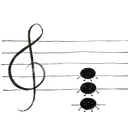
Through echo singing, varied orderings of chord tones, and melodic creation, students develop an aural awareness of the major triad, internalize do–mi–sol (1–3–5) as its constituent chord tones, and gradually progress from imitation to independent melodic creation and improvisation.
Procedures
- 1
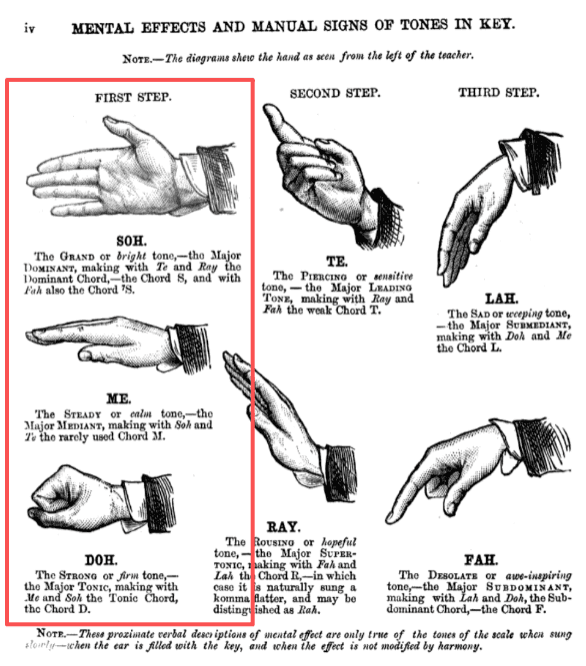
Establish the major-triad sonority. The teacher says, “Sing after me,” and sings do–mi–sol (1–3–5) while showing the corresponding Curwen hand signs (see below). Students echo the pattern and imitate the hand signs, repeating as needed until they can sing the three pitches accurately.
- 2
Reorder the chord tones. The teacher changes the order of the three chord tones—for example, mi–sol–do (3–5–1)—and students echo the new pattern.
- 3
Introduce variations. The teacher gradually increases the difficulty by varying the order and rhythm of the three chord tones, using patterns such as do–sol–mi, sol–mi–do, and mi–do–sol. Students echo each pattern after the teacher.
- 4
Student creation. Students take turns creating short melodic patterns using do, mi, and sol (1, 3, and 5) while showing the corresponding Curwen hand signs. After each student performs a pattern, the class echoes it.
- 5
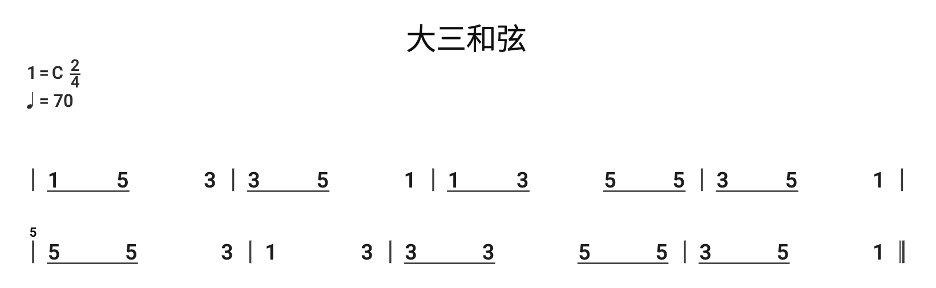
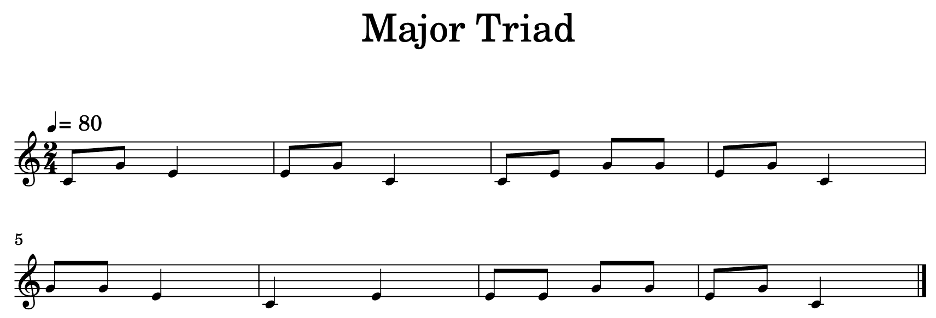
Collaborative composition. The teacher divides the class into four groups. Each group creates an eight-beat melody—two measures in 4/4 time—using only do, mi, and sol (1, 3, and 5). The final group must end its melody on do (1) to reinforce tonal stability and a sense of closure. The groups sing their melodies consecutively, joining the four phrases into one simple collaborative composition. (See below)
Variations
1. Adjust the balance between imitation and creation according to students’ readiness.
2. Students who need more support may continue echo singing across several lessons before creating their own patterns.
3. More advanced students may take turns creating new do–mi–sol (1–3–5) patterns in a rapid round-robin format.
4. Use a consistent gesture or verbal cue to distinguish listening from responding, ensuring that each pattern is completed before others echo it.
5. While one student creates a melody, others may maintain a steady beat through clapping, snapping, stepping, or classroom percussion.
6. As a further extension, divide the class into three groups, each sustaining one chord tone—do, mi, or sol—to experience the combined sound of a major triad.
Activity Sources
- Source Type:
- MAPS Original
- Source:
- Selected pedagogical principles are informed by Edwin E. Gordon’s Music Learning Theory (MLT).
- Adaptation Notes:
- Reference 1. Curwen, J. (1872). Standard course of lessons & exercises in the tonic sol-fa method of teaching music: With additional exercises (New ed.). Tonic Sol-fa Agency. 2. Gordon, E. E. (2012). Learning sequences in music: A contemporary music learning theory. GIA Publications.
MAPS teaching activities may come from a variety of sources, including original contributions by the MAPS team, online resources, published materials, activities learned from teachers, activities shared by colleagues, traditional teaching practices, and other sources. When a source can be reasonably identified, we make every effort to acknowledge it on the relevant activity page or in the accompanying reference information.
Some content may be organized, translated, structured, or adapted by the MAPS team for specific teaching contexts. Such editorial or instructional adaptation does not mean that MAPS claims ownership of the underlying third-party material. Rights to third-party content remain with the original authors, publishers, or other lawful rights holders.
If you are an author, copyright holder, or authorized representative and have questions or concerns regarding the source, attribution, or use of any content, please contact us:
Email: musicactivityps@gmail.com
Major Triad and Melodic Creation
Summary
Through echo singing, varied orderings of chord tones, and melodic creation, students develop an aural awareness of the major triad, internalize do–mi–sol (1–3–5) as its constituent chord tones, and gradually progress from imitation to independent melodic creation and improvisation.
Procedures
- 1
Establish the major-triad sonority. The teacher says, “Sing after me,” and sings do–mi–sol (1–3–5) while showing the corresponding Curwen hand signs (see below). Students echo the pattern and imitate the hand signs, repeating as needed until they can sing the three pitches accurately.
- 2
Reorder the chord tones. The teacher changes the order of the three chord tones—for example, mi–sol–do (3–5–1)—and students echo the new pattern.
- 3
Introduce variations. The teacher gradually increases the difficulty by varying the order and rhythm of the three chord tones, using patterns such as do–sol–mi, sol–mi–do, and mi–do–sol. Students echo each pattern after the teacher.
- 4
Student creation. Students take turns creating short melodic patterns using do, mi, and sol (1, 3, and 5) while showing the corresponding Curwen hand signs. After each student performs a pattern, the class echoes it.
- 5
Collaborative composition. The teacher divides the class into four groups. Each group creates an eight-beat melody—two measures in 4/4 time—using only do, mi, and sol (1, 3, and 5). The final group must end its melody on do (1) to reinforce tonal stability and a sense of closure. The groups sing their melodies consecutively, joining the four phrases into one simple collaborative composition. (See below)
Variations
1. Adjust the balance between imitation and creation according to students’ readiness.
2. Students who need more support may continue echo singing across several lessons before creating their own patterns.
3. More advanced students may take turns creating new do–mi–sol (1–3–5) patterns in a rapid round-robin format.
4. Use a consistent gesture or verbal cue to distinguish listening from responding, ensuring that each pattern is completed before others echo it.
5. While one student creates a melody, others may maintain a steady beat through clapping, snapping, stepping, or classroom percussion.
6. As a further extension, divide the class into three groups, each sustaining one chord tone—do, mi, or sol—to experience the combined sound of a major triad.
Activity Sources
- Source Type:
- MAPS Original
- Source:
- Selected pedagogical principles are informed by Edwin E. Gordon’s Music Learning Theory (MLT).
- Adaptation Notes:
- Reference 1. Curwen, J. (1872). Standard course of lessons & exercises in the tonic sol-fa method of teaching music: With additional exercises (New ed.). Tonic Sol-fa Agency. 2. Gordon, E. E. (2012). Learning sequences in music: A contemporary music learning theory. GIA Publications.
MAPS teaching activities may come from a variety of sources, including original contributions by the MAPS team, online resources, published materials, activities learned from teachers, activities shared by colleagues, traditional teaching practices, and other sources. When a source can be reasonably identified, we make every effort to acknowledge it on the relevant activity page or in the accompanying reference information.
Some content may be organized, translated, structured, or adapted by the MAPS team for specific teaching contexts. Such editorial or instructional adaptation does not mean that MAPS claims ownership of the underlying third-party material. Rights to third-party content remain with the original authors, publishers, or other lawful rights holders.
If you are an author, copyright holder, or authorized representative and have questions or concerns regarding the source, attribution, or use of any content, please contact us:
Email: musicactivityps@gmail.com