MAPS
Melody Grid
Summary
A melody-building game: students write a one-beat melodic pattern in each cell of a grid, using a variety of rhythm combinations. They then link different cells together to form new melodies - or one player points at cells while everyone else sings them, building a different melody every time. The activity develops rhythm reading, solfege fluency and simple melodic composition. Suitable for Grades 5-6; 4 or more players; 15-20 minutes.
Procedures
- 1
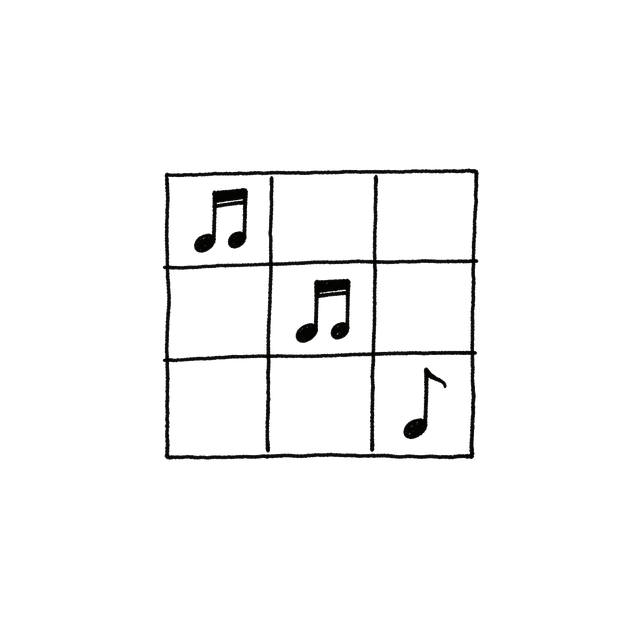
Draw a grid (e.g. 3x3). Write a one-beat melodic pattern in each cell; cells may use different rhythm combinations, such as quarter notes, two eighth notes, dotted rhythms and rests.
- 2
Sing the pattern in each cell to become familiar with every cell.
- 3
Link different cells together in any order to form a new melody, and sing it.
- 4
One player points at the cells one by one while the others sing them - the melody changes with every order.
- 5
Take turns being the pointer: a student points while the rest of the class sings.
- 6
Try linking the cells into melodies of different lengths: write four measures in duple meter, or eight measures in triple meter.
Variations
1. Not only the teacher can point - students take turns pointing at the cells too.
2. Link the cells into melodies of different lengths: four measures in duple meter, or eight measures in triple meter.
3. Adjust the difficulty by changing the rhythm combinations in the cells: start with quarter notes only, then add eighth notes, dotted rhythms and rests.
4. Try different grid sizes: 3x3, 4x4 or 5x5.
Activity Preparation
A grid drawn on the board or printed on paper, and pencils for writing the one-beat patterns
Activity Sources
- Source Type:
- Textbook / Book
- Source:
- Music Classroom Games: 53 Ways to Teach Music Well - Step One, activity Melody Grid.
MAPS teaching activities may come from a variety of sources, including original contributions by the MAPS team, online resources, published materials, activities learned from teachers, activities shared by colleagues, traditional teaching practices, and other sources. When a source can be reasonably identified, we make every effort to acknowledge it on the relevant activity page or in the accompanying reference information.
Some content may be organized, translated, structured, or adapted by the MAPS team for specific teaching contexts. Such editorial or instructional adaptation does not mean that MAPS claims ownership of the underlying third-party material. Rights to third-party content remain with the original authors, publishers, or other lawful rights holders.
If you are an author, copyright holder, or authorized representative and have questions or concerns regarding the source, attribution, or use of any content, please contact us:
Email: musicactivityps@gmail.com
Melody Grid
Summary
A melody-building game: students write a one-beat melodic pattern in each cell of a grid, using a variety of rhythm combinations. They then link different cells together to form new melodies - or one player points at cells while everyone else sings them, building a different melody every time. The activity develops rhythm reading, solfege fluency and simple melodic composition. Suitable for Grades 5-6; 4 or more players; 15-20 minutes.
Procedures
- 1
Draw a grid (e.g. 3x3). Write a one-beat melodic pattern in each cell; cells may use different rhythm combinations, such as quarter notes, two eighth notes, dotted rhythms and rests.
- 2
Sing the pattern in each cell to become familiar with every cell.
- 3
Link different cells together in any order to form a new melody, and sing it.
- 4
One player points at the cells one by one while the others sing them - the melody changes with every order.
- 5
Take turns being the pointer: a student points while the rest of the class sings.
- 6
Try linking the cells into melodies of different lengths: write four measures in duple meter, or eight measures in triple meter.
Variations
1. Not only the teacher can point - students take turns pointing at the cells too.
2. Link the cells into melodies of different lengths: four measures in duple meter, or eight measures in triple meter.
3. Adjust the difficulty by changing the rhythm combinations in the cells: start with quarter notes only, then add eighth notes, dotted rhythms and rests.
4. Try different grid sizes: 3x3, 4x4 or 5x5.
Activity Preparation
A grid drawn on the board or printed on paper, and pencils for writing the one-beat patterns
Activity Sources
- Source Type:
- Textbook / Book
- Source:
- Music Classroom Games: 53 Ways to Teach Music Well - Step One, activity Melody Grid.
MAPS teaching activities may come from a variety of sources, including original contributions by the MAPS team, online resources, published materials, activities learned from teachers, activities shared by colleagues, traditional teaching practices, and other sources. When a source can be reasonably identified, we make every effort to acknowledge it on the relevant activity page or in the accompanying reference information.
Some content may be organized, translated, structured, or adapted by the MAPS team for specific teaching contexts. Such editorial or instructional adaptation does not mean that MAPS claims ownership of the underlying third-party material. Rights to third-party content remain with the original authors, publishers, or other lawful rights holders.
If you are an author, copyright holder, or authorized representative and have questions or concerns regarding the source, attribution, or use of any content, please contact us:
Email: musicactivityps@gmail.com