 MAPS
Musical Thanks and Goodbye
Summary
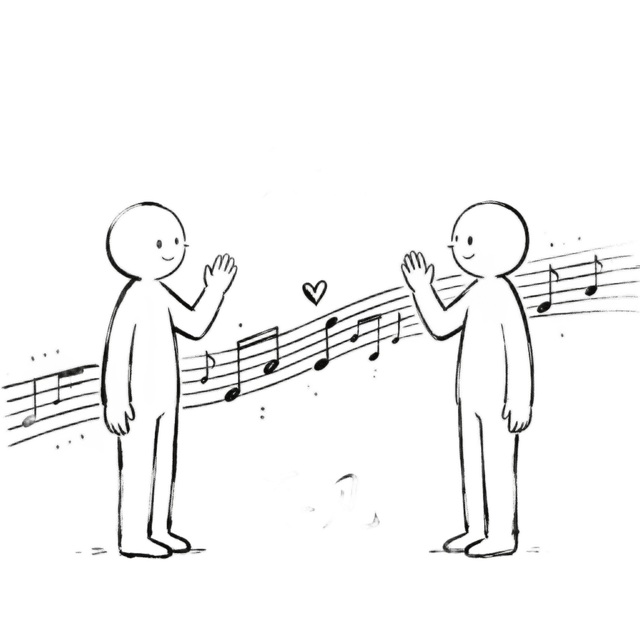
This is a music-class closing activity that combines a classroom gratitude ritual with sung call-and-response. The teacher sings a short expression of thanks to the whole class or to individual students using a fixed melody, and students respond with a brief sung answer, taking turns within a steady beat. The activity both affirms students, strengthens a sense of classroom community, and creates a positive closing routine, while also incorporating singing, steady beat, and musical call-and-response. In this natural classroom context, students practice attentive listening and independent singing.
Procedures
- 1
The teacher prepares a short, easy-to-sing fixed gratitude melody and a corresponding student response phrase. For example, the teacher might sing, “Thank you, [student’s name],” and the student responds with a set phrase such as “Thank you, teacher,” or another brief melodic response.
- 2
At the beginning of the activity, the teacher first settles the class and briefly names one specific behavior from the day that deserves recognition, such as attentive listening, active participation, cooperation, or willingness to try a new musical activity.
- 3
The teacher establishes a steady beat by lightly patting or using a simple body movement, then sings the fixed gratitude phrase to the whole class.
- 4
The whole class sings the agreed-upon response melody together once so that students become familiar with the tune and response pattern.
- 5
The teacher then moves to each student in turn and inserts the student’s name into the fixed melody, for example, “Thank you, Maya.” The named student independently sings the fixed response phrase while trying to maintain the established beat and melody.
- 6
The teacher continues in the same way until every student has had one opportunity to give an individual sung response.
- 7
After all students have responded, the teacher faces the whole class again and sings a final collective thank-you or farewell phrase. The class sings the final response together, bringing the lesson to a natural close.
Variations
1. For older students or students with stronger singing skills, instead of using a single fixed response melody, ask them to improvise their own sung responses using a specified set of pitches.
2. If the class is currently working on a particular rhythmic pattern, students can first sing their response and then perform the same rhythm on a percussion instrument.
Activity Preparation
1. The teacher prepares a short gratitude melody, approximately one to two phrases in length, along with a corresponding student response melody.
2. The melody should stay within a comfortable vocal range for the students and remain short and easy to remember.
Activity Sources
- Source Type:
- Website / Online resource
- Source:
- GIVE Guide — A Thank You Just For You Contributor:Angel Thompson https://teachwithgive.org/activities/a-thank-you-just-for-you/
- Adaptation Notes:
- The original activity was not primarily designed to teach musical concepts. This version retains the original structure of ‘’whole-class gratitude—individual thank-yous—collective farewell’’, while adding a fixed melody, steady beat, call-and-response singing, and individual student responses. These adaptations make the activity more suitable for the music classroom and create clear opportunities for musical learning.
MAPS teaching activities may come from a variety of sources, including original contributions by the MAPS team, online resources, published materials, activities learned from teachers, activities shared by colleagues, traditional teaching practices, and other sources. When a source can be reasonably identified, we make every effort to acknowledge it on the relevant activity page or in the accompanying reference information.
Some content may be organized, translated, structured, or adapted by the MAPS team for specific teaching contexts. Such editorial or instructional adaptation does not mean that MAPS claims ownership of the underlying third-party material. Rights to third-party content remain with the original authors, publishers, or other lawful rights holders.
If you are an author, copyright holder, or authorized representative and have questions or concerns regarding the source, attribution, or use of any content, please contact us:
Email: musicactivityps@gmail.com
Musical Thanks and Goodbye
Summary
This is a music-class closing activity that combines a classroom gratitude ritual with sung call-and-response. The teacher sings a short expression of thanks to the whole class or to individual students using a fixed melody, and students respond with a brief sung answer, taking turns within a steady beat. The activity both affirms students, strengthens a sense of classroom community, and creates a positive closing routine, while also incorporating singing, steady beat, and musical call-and-response. In this natural classroom context, students practice attentive listening and independent singing.
Procedures
- 1
The teacher prepares a short, easy-to-sing fixed gratitude melody and a corresponding student response phrase. For example, the teacher might sing, “Thank you, [student’s name],” and the student responds with a set phrase such as “Thank you, teacher,” or another brief melodic response.
- 2
At the beginning of the activity, the teacher first settles the class and briefly names one specific behavior from the day that deserves recognition, such as attentive listening, active participation, cooperation, or willingness to try a new musical activity.
- 3
The teacher establishes a steady beat by lightly patting or using a simple body movement, then sings the fixed gratitude phrase to the whole class.
- 4
The whole class sings the agreed-upon response melody together once so that students become familiar with the tune and response pattern.
- 5
The teacher then moves to each student in turn and inserts the student’s name into the fixed melody, for example, “Thank you, Maya.” The named student independently sings the fixed response phrase while trying to maintain the established beat and melody.
- 6
The teacher continues in the same way until every student has had one opportunity to give an individual sung response.
- 7
After all students have responded, the teacher faces the whole class again and sings a final collective thank-you or farewell phrase. The class sings the final response together, bringing the lesson to a natural close.
Variations
1. For older students or students with stronger singing skills, instead of using a single fixed response melody, ask them to improvise their own sung responses using a specified set of pitches.
2. If the class is currently working on a particular rhythmic pattern, students can first sing their response and then perform the same rhythm on a percussion instrument.
Activity Preparation
1. The teacher prepares a short gratitude melody, approximately one to two phrases in length, along with a corresponding student response melody.
2. The melody should stay within a comfortable vocal range for the students and remain short and easy to remember.
Activity Sources
- Source Type:
- Website / Online resource
- Source:
- GIVE Guide — A Thank You Just For You Contributor:Angel Thompson https://teachwithgive.org/activities/a-thank-you-just-for-you/
- Adaptation Notes:
- The original activity was not primarily designed to teach musical concepts. This version retains the original structure of ‘’whole-class gratitude—individual thank-yous—collective farewell’’, while adding a fixed melody, steady beat, call-and-response singing, and individual student responses. These adaptations make the activity more suitable for the music classroom and create clear opportunities for musical learning.
MAPS teaching activities may come from a variety of sources, including original contributions by the MAPS team, online resources, published materials, activities learned from teachers, activities shared by colleagues, traditional teaching practices, and other sources. When a source can be reasonably identified, we make every effort to acknowledge it on the relevant activity page or in the accompanying reference information.
Some content may be organized, translated, structured, or adapted by the MAPS team for specific teaching contexts. Such editorial or instructional adaptation does not mean that MAPS claims ownership of the underlying third-party material. Rights to third-party content remain with the original authors, publishers, or other lawful rights holders.
If you are an author, copyright holder, or authorized representative and have questions or concerns regarding the source, attribution, or use of any content, please contact us:
Email: musicactivityps@gmail.com