MAPS
Paper Music Exploration
Summary
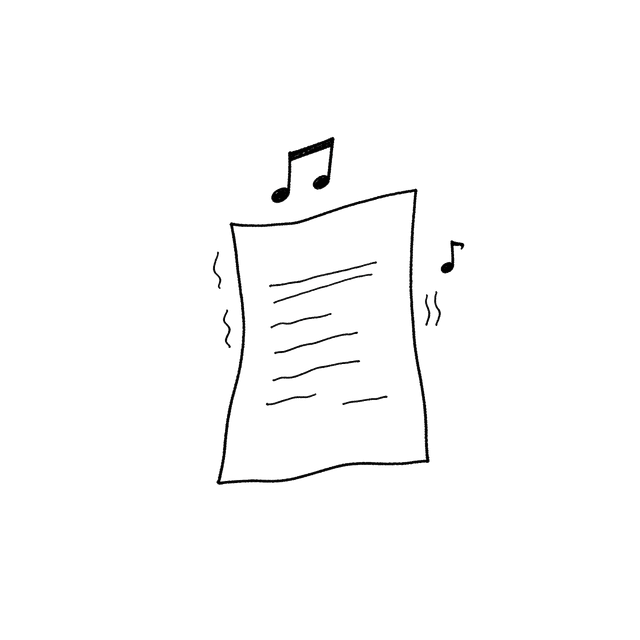
Students discover the many sounds a single sheet of A4 paper can make - shaking, flicking, waving, or snapping it taut - and listen for how the sounds differ: long or short, connected or detached, loud or soft. The activity is open-ended: students explore freely, share their discoveries, and make their own associations. It trains listening, timbre awareness and creativity.
Procedures
- 1
Give every student a sheet of A4 paper.
- 2
Free exploration: shake it, flick it, wave it, or snap it taut - how many different sounds can you discover?
- 3
Share discoveries: volunteers show a sound they found, and the class listens and describes it.
- 4
Listen and sort: put the sounds into groups - long or short, connected (legato) or detached (staccato), loud or soft.
- 5
Play with the sounds: echo the teacher's paper-sound pattern, or make a rhythm with the paper.
- 6
Free association: think of a picture or a story the sound suggests, and recreate it with your paper.
Variations
1. Echo game: the teacher makes a paper-sound pattern and the class copies it exactly.
2. Small groups: each group builds a short "paper piece" together and performs it.
3. Accompany a song or a story: use paper sounds to add colour to music or a read-aloud.
4. Extend to other materials: try newspaper, tissue paper, cardboard or plastic - compare their sounds.
Activity Preparation
One sheet of A4 paper per student; optional other kinds of paper for the extension.
Activity Sources
- Source Type:
- Shared by colleague
MAPS teaching activities may come from a variety of sources, including original contributions by the MAPS team, online resources, published materials, activities learned from teachers, activities shared by colleagues, traditional teaching practices, and other sources. When a source can be reasonably identified, we make every effort to acknowledge it on the relevant activity page or in the accompanying reference information.
Some content may be organized, translated, structured, or adapted by the MAPS team for specific teaching contexts. Such editorial or instructional adaptation does not mean that MAPS claims ownership of the underlying third-party material. Rights to third-party content remain with the original authors, publishers, or other lawful rights holders.
If you are an author, copyright holder, or authorized representative and have questions or concerns regarding the source, attribution, or use of any content, please contact us:
Email: musicactivityps@gmail.com
Paper Music Exploration
Summary
Students discover the many sounds a single sheet of A4 paper can make - shaking, flicking, waving, or snapping it taut - and listen for how the sounds differ: long or short, connected or detached, loud or soft. The activity is open-ended: students explore freely, share their discoveries, and make their own associations. It trains listening, timbre awareness and creativity.
Procedures
- 1
Give every student a sheet of A4 paper.
- 2
Free exploration: shake it, flick it, wave it, or snap it taut - how many different sounds can you discover?
- 3
Share discoveries: volunteers show a sound they found, and the class listens and describes it.
- 4
Listen and sort: put the sounds into groups - long or short, connected (legato) or detached (staccato), loud or soft.
- 5
Play with the sounds: echo the teacher's paper-sound pattern, or make a rhythm with the paper.
- 6
Free association: think of a picture or a story the sound suggests, and recreate it with your paper.
Variations
1. Echo game: the teacher makes a paper-sound pattern and the class copies it exactly.
2. Small groups: each group builds a short "paper piece" together and performs it.
3. Accompany a song or a story: use paper sounds to add colour to music or a read-aloud.
4. Extend to other materials: try newspaper, tissue paper, cardboard or plastic - compare their sounds.
Activity Preparation
One sheet of A4 paper per student; optional other kinds of paper for the extension.
Activity Sources
- Source Type:
- Shared by colleague
MAPS teaching activities may come from a variety of sources, including original contributions by the MAPS team, online resources, published materials, activities learned from teachers, activities shared by colleagues, traditional teaching practices, and other sources. When a source can be reasonably identified, we make every effort to acknowledge it on the relevant activity page or in the accompanying reference information.
Some content may be organized, translated, structured, or adapted by the MAPS team for specific teaching contexts. Such editorial or instructional adaptation does not mean that MAPS claims ownership of the underlying third-party material. Rights to third-party content remain with the original authors, publishers, or other lawful rights holders.
If you are an author, copyright holder, or authorized representative and have questions or concerns regarding the source, attribution, or use of any content, please contact us:
Email: musicactivityps@gmail.com