 MAPS
Paper Plate Percussionist
Summary
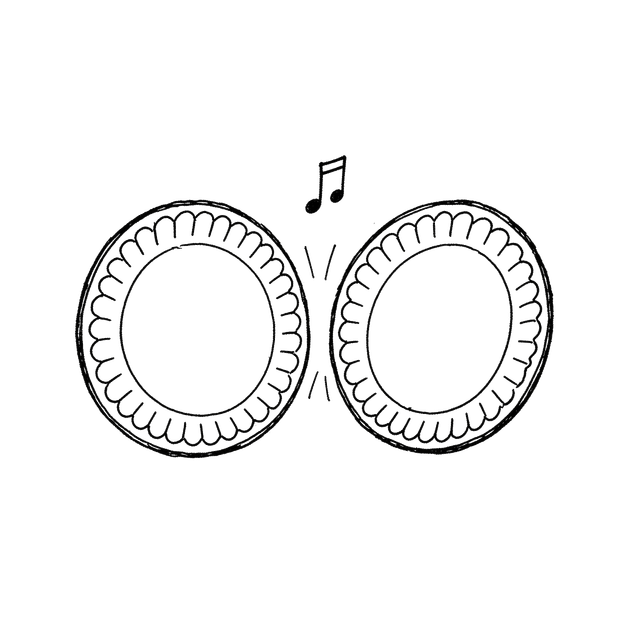
A rhythm activity in which each student uses two paper plates as cymbal-like instruments and plays along with the music. Students explore different sounds - clapping the plates together, tapping the rim, patting the face, rubbing and shaking - then follow the music to keep the steady beat and imitate simple rhythm patterns. The activity trains steady beat, rhythm awareness and ensemble listening with a simple simulated instrument that every child can play.
Procedures
- 1
Give each student two sturdy paper plates (they can be decorated in advance).
- 2
Explore the sounds: clap the plates together like cymbals, tap the rim with your fingertips, pat the plate face, rub the plates together or shake them quickly - listen to the different sounds each way makes.
- 3
Listen to the music once through and feel its tempo and strong beats.
- 4
Follow the music: clap the plates together on the steady beat.
- 5
Imitate rhythm patterns: the teacher plays a short pattern with the plates (e.g. quarter notes, paired eighth notes, a rest), and the class plays it back.
- 6
Add body movements: tap the plates on your shoulders, hips or knees, or rub them back and forth on your legs, changing with the musical phrases.
Variations
1. Add stop signals: when the music stops or the teacher gives a freeze sign, everyone stops instantly.
2. Change the tempo: play the same music faster or slower, or speed up gradually.
3. Split into groups: one group keeps the steady beat while another plays rhythm patterns, then swap.
4. Let students create their own rhythm patterns with the plates and share them with the class.
Reference Video Link
Activity Preparation
Two sturdy paper plates per student, a piece of music with a clear rhythm (e.g. a dance piece), optional markers for decorating.
Activity Sources
- Source Type:
- Website / Online resource
- Source:
- Online resource - inspired by the video "有趣的纸盘律动操" (Kodaly music education, Bilibili).
MAPS teaching activities may come from a variety of sources, including original contributions by the MAPS team, online resources, published materials, activities learned from teachers, activities shared by colleagues, traditional teaching practices, and other sources. When a source can be reasonably identified, we make every effort to acknowledge it on the relevant activity page or in the accompanying reference information.
Some content may be organized, translated, structured, or adapted by the MAPS team for specific teaching contexts. Such editorial or instructional adaptation does not mean that MAPS claims ownership of the underlying third-party material. Rights to third-party content remain with the original authors, publishers, or other lawful rights holders.
If you are an author, copyright holder, or authorized representative and have questions or concerns regarding the source, attribution, or use of any content, please contact us:
Email: musicactivityps@gmail.com
Paper Plate Percussionist
Summary
A rhythm activity in which each student uses two paper plates as cymbal-like instruments and plays along with the music. Students explore different sounds - clapping the plates together, tapping the rim, patting the face, rubbing and shaking - then follow the music to keep the steady beat and imitate simple rhythm patterns. The activity trains steady beat, rhythm awareness and ensemble listening with a simple simulated instrument that every child can play.
Procedures
- 1
Give each student two sturdy paper plates (they can be decorated in advance).
- 2
Explore the sounds: clap the plates together like cymbals, tap the rim with your fingertips, pat the plate face, rub the plates together or shake them quickly - listen to the different sounds each way makes.
- 3
Listen to the music once through and feel its tempo and strong beats.
- 4
Follow the music: clap the plates together on the steady beat.
- 5
Imitate rhythm patterns: the teacher plays a short pattern with the plates (e.g. quarter notes, paired eighth notes, a rest), and the class plays it back.
- 6
Add body movements: tap the plates on your shoulders, hips or knees, or rub them back and forth on your legs, changing with the musical phrases.
Variations
1. Add stop signals: when the music stops or the teacher gives a freeze sign, everyone stops instantly.
2. Change the tempo: play the same music faster or slower, or speed up gradually.
3. Split into groups: one group keeps the steady beat while another plays rhythm patterns, then swap.
4. Let students create their own rhythm patterns with the plates and share them with the class.
Reference Video Link
Activity Preparation
Two sturdy paper plates per student, a piece of music with a clear rhythm (e.g. a dance piece), optional markers for decorating.
Activity Sources
- Source Type:
- Website / Online resource
- Source:
- Online resource - inspired by the video "有趣的纸盘律动操" (Kodaly music education, Bilibili).
MAPS teaching activities may come from a variety of sources, including original contributions by the MAPS team, online resources, published materials, activities learned from teachers, activities shared by colleagues, traditional teaching practices, and other sources. When a source can be reasonably identified, we make every effort to acknowledge it on the relevant activity page or in the accompanying reference information.
Some content may be organized, translated, structured, or adapted by the MAPS team for specific teaching contexts. Such editorial or instructional adaptation does not mean that MAPS claims ownership of the underlying third-party material. Rights to third-party content remain with the original authors, publishers, or other lawful rights holders.
If you are an author, copyright holder, or authorized representative and have questions or concerns regarding the source, attribution, or use of any content, please contact us:
Email: musicactivityps@gmail.com