 MAPS
Rhythm Change-Up
Summary
Students reinforce their fluency with combined rhythm patterns (quarter notes, eighth notes, sixteenth notes, and quarter rests) through a "read-and-respond" game. Students on stage hold rhythm cards while the class reads and claps the patterns aloud. Each correct response triggers a change in the students' positions on stage, keeping the drill fresh and engaging. Tempo can be adjusted via metronome as proficiency grows. This activity works well for practicing and consolidating rhythm concepts, and can also serve as an informal assessment.
Procedures
- 1
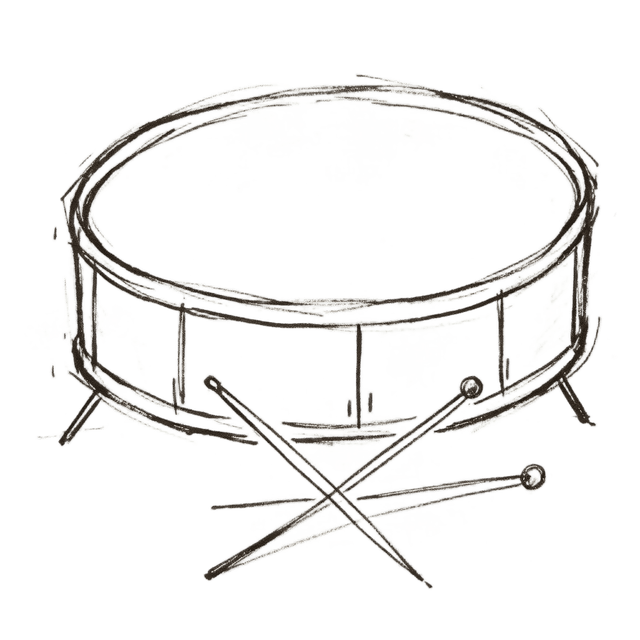
The teacher plays a lively drum beat and leads students in a short free-movement warm-up. The teacher then introduces rhythm cards featuring quarter notes, eighth notes, sixteenth notes, and quarter rests. Each pattern is demonstrated through rhythm reading and clapping, with special attention to the quarter rest as a silent beat.
- 2
Following a metronome at a steady tempo, the whole class practices reading and clapping the four basic rhythm patterns together. The teacher adjusts the tempo according to students’ needs—slowing down when additional reinforcement is needed and gradually increasing the speed as students become more confident.
- 3
The teacher mixes and matches the four rhythm types to create short rhythm phrases. After the whole class chants and claps each phrase together, students take turns performing them in boys’ and girls’ groups or small groups in a rhythm relay. Special attention is given to clean, precise rests, with the goal of achieving “accurate sounds and clean silences.”
- 4
Several students are invited to the front of the class. Each student holds a different rhythm card and stands in a row to form a “Rhythm Line-Up,” while the rest of the class becomes the “Response Team.” The metronome continues throughout the activity to maintain a steady beat.
- 5
The teacher randomly points to one of the rhythm cards held by the students at the front. The Response Team identifies the rhythm and performs it together by chanting and clapping.
- 6
Each time the class reads and claps the selected rhythm accurately, the students holding the cards immediately rearrange themselves into a new order.
- 7
As students become more proficient, the teacher gradually increases the metronome tempo and introduces more challenging rhythm combinations. The game continues through several rounds, and some rhythm cards may be replaced between rounds to maintain variety and increase the level of challenge.
- 8
To conclude the activity, the teacher reviews the characteristics of the four rhythm types and reinforces the importance of maintaining a steady beat, observing clean rests, and controlling tempo. Students who demonstrate accurate rhythm reading and active participation are acknowledged.
Variations
1. Classroom Management: Remind students on stage to move carefully when swapping places to avoid pushing or tripping. The response team should keep their reading together and not rush ahead. The teacher may use hand signals to cue the start and stop of reading to avoid confusion.
2. Difficulty Adjustments: To lower the difficulty, use only quarter notes and quarter rests with a metronome at 60 BPM. To increase difficulty, add sixteenth-note combinations and speed up the metronome to 100 BPM or above; also require students on stage to accurately read the new combination from their new positions immediately after each swap.
3. Extensions: Invite a student to act as the "conductor" using hand gestures to signal tempo changes. Alternatively, replace rhythm cards with melody cards (e.g., sol–mi–la) to transfer the game to pitch reading practice.
Reference Video Link
Activity Preparation
1.Prepare one rhythm card for each student who comes to the front, featuring combinations of quarter notes, eighth notes, sixteenth notes, and quarter rests.
2.Prepare a metronome or an audio device for playing drum beats.
Ensure that students have enough space to stand and move comfortably, and reserve a designated standing area at the front of the classroom.
Activity Sources
- Source Type:
- Website / Online resource
- Source:
- Redbook
MAPS teaching activities may come from a variety of sources, including original contributions by the MAPS team, online resources, published materials, activities learned from teachers, activities shared by colleagues, traditional teaching practices, and other sources. When a source can be reasonably identified, we make every effort to acknowledge it on the relevant activity page or in the accompanying reference information.
Some content may be organized, translated, structured, or adapted by the MAPS team for specific teaching contexts. Such editorial or instructional adaptation does not mean that MAPS claims ownership of the underlying third-party material. Rights to third-party content remain with the original authors, publishers, or other lawful rights holders.
If you are an author, copyright holder, or authorized representative and have questions or concerns regarding the source, attribution, or use of any content, please contact us:
Email: musicactivityps@gmail.com
Rhythm Change-Up
Summary
Students reinforce their fluency with combined rhythm patterns (quarter notes, eighth notes, sixteenth notes, and quarter rests) through a "read-and-respond" game. Students on stage hold rhythm cards while the class reads and claps the patterns aloud. Each correct response triggers a change in the students' positions on stage, keeping the drill fresh and engaging. Tempo can be adjusted via metronome as proficiency grows. This activity works well for practicing and consolidating rhythm concepts, and can also serve as an informal assessment.
Procedures
- 1
The teacher plays a lively drum beat and leads students in a short free-movement warm-up. The teacher then introduces rhythm cards featuring quarter notes, eighth notes, sixteenth notes, and quarter rests. Each pattern is demonstrated through rhythm reading and clapping, with special attention to the quarter rest as a silent beat.
- 2
Following a metronome at a steady tempo, the whole class practices reading and clapping the four basic rhythm patterns together. The teacher adjusts the tempo according to students’ needs—slowing down when additional reinforcement is needed and gradually increasing the speed as students become more confident.
- 3
The teacher mixes and matches the four rhythm types to create short rhythm phrases. After the whole class chants and claps each phrase together, students take turns performing them in boys’ and girls’ groups or small groups in a rhythm relay. Special attention is given to clean, precise rests, with the goal of achieving “accurate sounds and clean silences.”
- 4
Several students are invited to the front of the class. Each student holds a different rhythm card and stands in a row to form a “Rhythm Line-Up,” while the rest of the class becomes the “Response Team.” The metronome continues throughout the activity to maintain a steady beat.
- 5
The teacher randomly points to one of the rhythm cards held by the students at the front. The Response Team identifies the rhythm and performs it together by chanting and clapping.
- 6
Each time the class reads and claps the selected rhythm accurately, the students holding the cards immediately rearrange themselves into a new order.
- 7
As students become more proficient, the teacher gradually increases the metronome tempo and introduces more challenging rhythm combinations. The game continues through several rounds, and some rhythm cards may be replaced between rounds to maintain variety and increase the level of challenge.
- 8
To conclude the activity, the teacher reviews the characteristics of the four rhythm types and reinforces the importance of maintaining a steady beat, observing clean rests, and controlling tempo. Students who demonstrate accurate rhythm reading and active participation are acknowledged.
Variations
1. Classroom Management: Remind students on stage to move carefully when swapping places to avoid pushing or tripping. The response team should keep their reading together and not rush ahead. The teacher may use hand signals to cue the start and stop of reading to avoid confusion.
2. Difficulty Adjustments: To lower the difficulty, use only quarter notes and quarter rests with a metronome at 60 BPM. To increase difficulty, add sixteenth-note combinations and speed up the metronome to 100 BPM or above; also require students on stage to accurately read the new combination from their new positions immediately after each swap.
3. Extensions: Invite a student to act as the "conductor" using hand gestures to signal tempo changes. Alternatively, replace rhythm cards with melody cards (e.g., sol–mi–la) to transfer the game to pitch reading practice.
Reference Video Link
Activity Preparation
1.Prepare one rhythm card for each student who comes to the front, featuring combinations of quarter notes, eighth notes, sixteenth notes, and quarter rests.
2.Prepare a metronome or an audio device for playing drum beats.
Ensure that students have enough space to stand and move comfortably, and reserve a designated standing area at the front of the classroom.
Activity Sources
- Source Type:
- Website / Online resource
- Source:
- Redbook
MAPS teaching activities may come from a variety of sources, including original contributions by the MAPS team, online resources, published materials, activities learned from teachers, activities shared by colleagues, traditional teaching practices, and other sources. When a source can be reasonably identified, we make every effort to acknowledge it on the relevant activity page or in the accompanying reference information.
Some content may be organized, translated, structured, or adapted by the MAPS team for specific teaching contexts. Such editorial or instructional adaptation does not mean that MAPS claims ownership of the underlying third-party material. Rights to third-party content remain with the original authors, publishers, or other lawful rights holders.
If you are an author, copyright holder, or authorized representative and have questions or concerns regarding the source, attribution, or use of any content, please contact us:
Email: musicactivityps@gmail.com