MAPS
Rhythm Relay
Summary
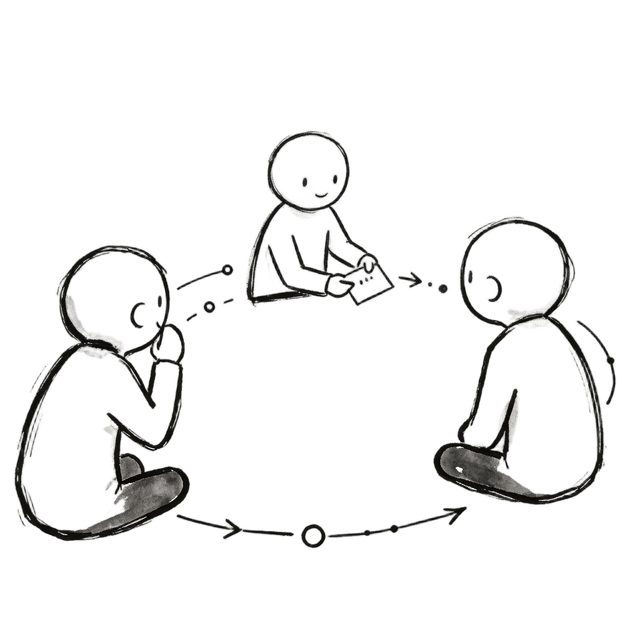
Rhythm Relay is a chain-style rhythm game in which the teacher claps a four-beat rhythm, the first student echoes the last two beats and adds two new beats, the next student echoes the last two of the previous student and adds two more, and so on. As the chain grows, students must hold rhythmic memory of an ever-longer phrase while improvising fresh material. Two variations are introduced — "tail relay" (echo the end and extend) and "head relay" (echo the beginning and continue). The activity sharpens rhythmic memory, trains reactive improvisation, and cultivates attentive listening. It works well as a rhythm warm-up, a steady-beat reinforcement drill, or a quick creativity check.
Procedures
- 1
The teacher introduces the activity as a chain story: "I'm going to clap a rhythm, and each of you will repeat the last two beats and add two new beats of your own. Let's see how long our rhythm chain can grow."
- 2
The teacher establishes a steady tempo with a metronome at 80 BPM. The class claps on every beat for 30 seconds to internalize the pulse.
- 3
Round 1 — Tail Relay: The teacher claps a four-beat pattern (e.g., clap-clap-pause-clap). The first student echoes the last two beats (pause-clap) and adds two new beats (e.g., clap-pause). The second student echoes the last two of the previous student (clap-pause) and adds two new beats. The chain continues with each new student repeating the last two and adding two more.
- 4
If a student forgets or breaks the rhythm, the chain pauses briefly: the class claps the steady beat together for 4 beats, then the student tries again from the last correctly performed two beats.
- 5
Round 2 — Head Relay: The teacher claps a four-beat pattern. The first student echoes the FIRST two beats (instead of the last two) and continues with two new beats. Each subsequent student then echoes the FIRST two beats of the previous student's contribution and adds two more. This variation trains a different kind of rhythmic memory.
- 6
Round 3 — Body-Sound Relay: The teacher changes the rules so each student must echo the last two beats with body percussion of their choice (clap, pat, snap, stomp) AND add two new beats in a different body sound. This adds a sound-color dimension to the chain.
- 7
Round 4 — Small Group Relay: The class divides into two circles of 6–8 students. Each circle builds its own chain simultaneously, with the teacher pointing to indicate whose turn it is. The first circle to complete a 24-beat chain without breaking wins.
- 8
To conclude, the teacher leads a short reflection: which variation was easiest, and why? Students discuss how listening and memory work together in improvisation. The teacher reinforces that rhythm relay is a foundation for musical conversation.
Variations
1. Classroom Management: To prevent chaos, ensure only the current student is performing while others listen in silence. If the chain breaks, the class claps a steady 4-beat reset before continuing. Avoid singling out students who struggle — let a neighbor model instead.
2. Difficulty Adjustments: To lower difficulty, reduce to ONE added beat per turn (echo the last beat, add one new). Use only clapping, no body sounds. To increase difficulty, require each student to add THREE new beats, or build the chain in a different meter (3/4 instead of 4/4).
3. Extensions: (1) Turn the chain into a melodic relay — students hum the rhythm on a fixed pitch (e.g., sol) instead of clapping. (2) Record the chain with a phone and play it back for the class to evaluate the rhythm accuracy. (3) Connect to composition — the resulting chain becomes the rhythmic backbone of an original student composition.
Activity Preparation
Prepare a metronome at 80 BPM (audio or app). Arrange students in a circle or line so each student can clearly hear the previous performer. For the small group relay, divide the class into two balanced circles of 6–8 students with enough floor space for both to perform simultaneously.
Activity Sources
- Source Type:
- Website / Online resource
- Source:
- https://pdduxie.cn/h-nd-496.html http://wap.musicedu8.com/e/wap/show.php?cid=10&classid=10&cpage=70&id=71210
- Adaptation Notes:
- Inspired by the Orff-based 'relay chain' method (接尾/接头) widely used in Chinese primary schoolsl music classrooms; extended with body-sound variations and small-group competition.
MAPS teaching activities may come from a variety of sources, including original contributions by the MAPS team, online resources, published materials, activities learned from teachers, activities shared by colleagues, traditional teaching practices, and other sources. When a source can be reasonably identified, we make every effort to acknowledge it on the relevant activity page or in the accompanying reference information.
Some content may be organized, translated, structured, or adapted by the MAPS team for specific teaching contexts. Such editorial or instructional adaptation does not mean that MAPS claims ownership of the underlying third-party material. Rights to third-party content remain with the original authors, publishers, or other lawful rights holders.
If you are an author, copyright holder, or authorized representative and have questions or concerns regarding the source, attribution, or use of any content, please contact us:
Email: musicactivityps@gmail.com
Rhythm Relay
Summary
Rhythm Relay is a chain-style rhythm game in which the teacher claps a four-beat rhythm, the first student echoes the last two beats and adds two new beats, the next student echoes the last two of the previous student and adds two more, and so on. As the chain grows, students must hold rhythmic memory of an ever-longer phrase while improvising fresh material. Two variations are introduced — "tail relay" (echo the end and extend) and "head relay" (echo the beginning and continue). The activity sharpens rhythmic memory, trains reactive improvisation, and cultivates attentive listening. It works well as a rhythm warm-up, a steady-beat reinforcement drill, or a quick creativity check.
Procedures
- 1
The teacher introduces the activity as a chain story: "I'm going to clap a rhythm, and each of you will repeat the last two beats and add two new beats of your own. Let's see how long our rhythm chain can grow."
- 2
The teacher establishes a steady tempo with a metronome at 80 BPM. The class claps on every beat for 30 seconds to internalize the pulse.
- 3
Round 1 — Tail Relay: The teacher claps a four-beat pattern (e.g., clap-clap-pause-clap). The first student echoes the last two beats (pause-clap) and adds two new beats (e.g., clap-pause). The second student echoes the last two of the previous student (clap-pause) and adds two new beats. The chain continues with each new student repeating the last two and adding two more.
- 4
If a student forgets or breaks the rhythm, the chain pauses briefly: the class claps the steady beat together for 4 beats, then the student tries again from the last correctly performed two beats.
- 5
Round 2 — Head Relay: The teacher claps a four-beat pattern. The first student echoes the FIRST two beats (instead of the last two) and continues with two new beats. Each subsequent student then echoes the FIRST two beats of the previous student's contribution and adds two more. This variation trains a different kind of rhythmic memory.
- 6
Round 3 — Body-Sound Relay: The teacher changes the rules so each student must echo the last two beats with body percussion of their choice (clap, pat, snap, stomp) AND add two new beats in a different body sound. This adds a sound-color dimension to the chain.
- 7
Round 4 — Small Group Relay: The class divides into two circles of 6–8 students. Each circle builds its own chain simultaneously, with the teacher pointing to indicate whose turn it is. The first circle to complete a 24-beat chain without breaking wins.
- 8
To conclude, the teacher leads a short reflection: which variation was easiest, and why? Students discuss how listening and memory work together in improvisation. The teacher reinforces that rhythm relay is a foundation for musical conversation.
Variations
1. Classroom Management: To prevent chaos, ensure only the current student is performing while others listen in silence. If the chain breaks, the class claps a steady 4-beat reset before continuing. Avoid singling out students who struggle — let a neighbor model instead.
2. Difficulty Adjustments: To lower difficulty, reduce to ONE added beat per turn (echo the last beat, add one new). Use only clapping, no body sounds. To increase difficulty, require each student to add THREE new beats, or build the chain in a different meter (3/4 instead of 4/4).
3. Extensions: (1) Turn the chain into a melodic relay — students hum the rhythm on a fixed pitch (e.g., sol) instead of clapping. (2) Record the chain with a phone and play it back for the class to evaluate the rhythm accuracy. (3) Connect to composition — the resulting chain becomes the rhythmic backbone of an original student composition.
Activity Preparation
Prepare a metronome at 80 BPM (audio or app). Arrange students in a circle or line so each student can clearly hear the previous performer. For the small group relay, divide the class into two balanced circles of 6–8 students with enough floor space for both to perform simultaneously.
Activity Sources
- Source Type:
- Website / Online resource
- Source:
- https://pdduxie.cn/h-nd-496.html http://wap.musicedu8.com/e/wap/show.php?cid=10&classid=10&cpage=70&id=71210
- Adaptation Notes:
- Inspired by the Orff-based 'relay chain' method (接尾/接头) widely used in Chinese primary schoolsl music classrooms; extended with body-sound variations and small-group competition.
MAPS teaching activities may come from a variety of sources, including original contributions by the MAPS team, online resources, published materials, activities learned from teachers, activities shared by colleagues, traditional teaching practices, and other sources. When a source can be reasonably identified, we make every effort to acknowledge it on the relevant activity page or in the accompanying reference information.
Some content may be organized, translated, structured, or adapted by the MAPS team for specific teaching contexts. Such editorial or instructional adaptation does not mean that MAPS claims ownership of the underlying third-party material. Rights to third-party content remain with the original authors, publishers, or other lawful rights holders.
If you are an author, copyright holder, or authorized representative and have questions or concerns regarding the source, attribution, or use of any content, please contact us:
Email: musicactivityps@gmail.com