 MAPS
Shoulder Check-In
Summary
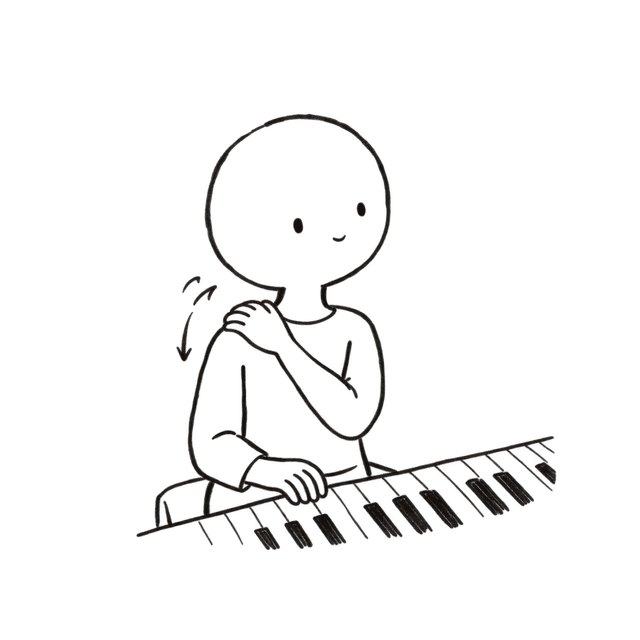
This brief warm-up helps students notice and release unnecessary shoulder tension before and during piano playing. Students first exaggerate the sensation by lifting both shoulders toward their ears, then letting them drop naturally. During one-hand practice, the non-playing hand can rest lightly on the playing-side shoulder; if that shoulder begins to rise, the student can feel it immediately and reset.
Procedures
- 1
Invite students to sit comfortably at the piano with both feet supported and arms resting naturally.
- 2
Ask students to slowly lift both shoulders as high as they comfortably can, noticing the feeling of tension.
- 3
On an exhale, let the shoulders release and return naturally to a comfortable resting position. Repeat two or three times.
- 4
Begin a short one-hand pattern or passage. The non-playing hand rests lightly on the shoulder of the playing arm.
Variations
1. Teacher-Guided Shoulder Check: When the teacher notices tension during a student’s playing, first identify whether it is primarily in the right shoulder, left shoulder, or both shoulders. During one-hand playing, invite the student to lightly touch the shoulder on the playing side with the non-playing hand and notice whether it is unintentionally lifted or tense. Physical Guidance Note: Any physical contact or touch-based cue from the teacher requires the student’s explicit consent and must follow the relevant policies of the teaching setting. Verbal prompts or demonstration may also be used to help students notice their shoulder position independently.
2. Both-Shoulders Reset: If tension is present in both shoulders, pause playing. Ask the student to place both hands gently on their own shoulders and notice whether the shoulders are raised or rigid. Once the shoulders have relaxed naturally, resume by playing a short phrase at a slower tempo.
Activity Preparation
Piano or keyboard
Activity Sources
- Source Type:
- Learned from a teacher
- Source:
- Prof. Maria del Pico Taylor
MAPS teaching activities may come from a variety of sources, including original contributions by the MAPS team, online resources, published materials, activities learned from teachers, activities shared by colleagues, traditional teaching practices, and other sources. When a source can be reasonably identified, we make every effort to acknowledge it on the relevant activity page or in the accompanying reference information.
Some content may be organized, translated, structured, or adapted by the MAPS team for specific teaching contexts. Such editorial or instructional adaptation does not mean that MAPS claims ownership of the underlying third-party material. Rights to third-party content remain with the original authors, publishers, or other lawful rights holders.
If you are an author, copyright holder, or authorized representative and have questions or concerns regarding the source, attribution, or use of any content, please contact us:
Email: musicactivityps@gmail.com
Shoulder Check-In
Summary
This brief warm-up helps students notice and release unnecessary shoulder tension before and during piano playing. Students first exaggerate the sensation by lifting both shoulders toward their ears, then letting them drop naturally. During one-hand practice, the non-playing hand can rest lightly on the playing-side shoulder; if that shoulder begins to rise, the student can feel it immediately and reset.
Procedures
- 1
Invite students to sit comfortably at the piano with both feet supported and arms resting naturally.
- 2
Ask students to slowly lift both shoulders as high as they comfortably can, noticing the feeling of tension.
- 3
On an exhale, let the shoulders release and return naturally to a comfortable resting position. Repeat two or three times.
- 4
Begin a short one-hand pattern or passage. The non-playing hand rests lightly on the shoulder of the playing arm.
Variations
1. Teacher-Guided Shoulder Check: When the teacher notices tension during a student’s playing, first identify whether it is primarily in the right shoulder, left shoulder, or both shoulders. During one-hand playing, invite the student to lightly touch the shoulder on the playing side with the non-playing hand and notice whether it is unintentionally lifted or tense. Physical Guidance Note: Any physical contact or touch-based cue from the teacher requires the student’s explicit consent and must follow the relevant policies of the teaching setting. Verbal prompts or demonstration may also be used to help students notice their shoulder position independently.
2. Both-Shoulders Reset: If tension is present in both shoulders, pause playing. Ask the student to place both hands gently on their own shoulders and notice whether the shoulders are raised or rigid. Once the shoulders have relaxed naturally, resume by playing a short phrase at a slower tempo.
Activity Preparation
Piano or keyboard
Activity Sources
- Source Type:
- Learned from a teacher
- Source:
- Prof. Maria del Pico Taylor
MAPS teaching activities may come from a variety of sources, including original contributions by the MAPS team, online resources, published materials, activities learned from teachers, activities shared by colleagues, traditional teaching practices, and other sources. When a source can be reasonably identified, we make every effort to acknowledge it on the relevant activity page or in the accompanying reference information.
Some content may be organized, translated, structured, or adapted by the MAPS team for specific teaching contexts. Such editorial or instructional adaptation does not mean that MAPS claims ownership of the underlying third-party material. Rights to third-party content remain with the original authors, publishers, or other lawful rights holders.
If you are an author, copyright holder, or authorized representative and have questions or concerns regarding the source, attribution, or use of any content, please contact us:
Email: musicactivityps@gmail.com