 MAPS
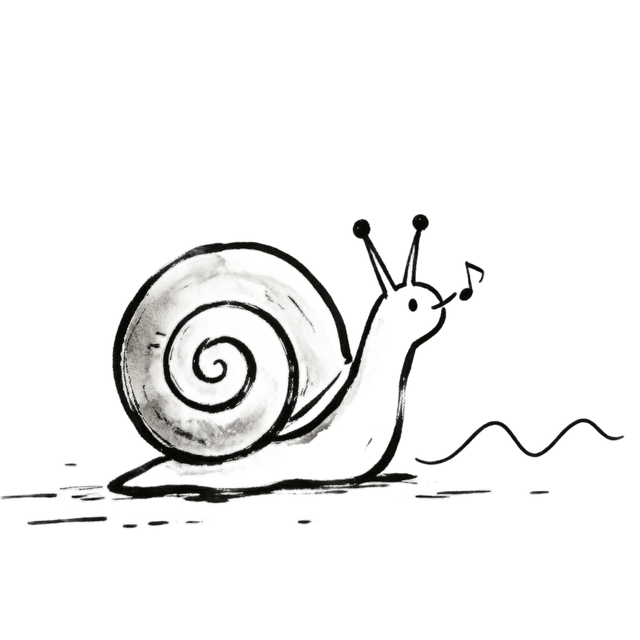
Sing Slowly
Summary
Sing a familiar song at half tempo: turn one beat into two and two beats into four, singing word by word on the longest breath possible. Students learn the concept of halved tempo, distinguish different speeds, and take on a long-breath singing challenge.
Procedures
- 1
Sing a song at its original tempo.
- 2
Ask: How would we sing this song twice as slowly?
- 3
Model half-tempo singing: sing every word of the song down to half speed.
- 4
Read the notation and sing: quarter notes become half notes, and half notes become whole notes etc.
- 5
Sing with the longest possible breath and minimize the number of breaths you take.
- 6
Try other songs as a challenge .
Variations
1. Loud singing can make the voice wobble and unsteady — try singing softly instead.
2. Move your hand horizontally in front of the class to help students keep their voices steady.
3. Take on the challenge of singing slower and slower — at half the tempo first, then even slower.
Activity Preparation
1. Music score, or lyrics written on the board, for the known songs;
2. A slowed-down version of the notation: quarter notes become half notes, half notes become whole notes (prepare in advance);
3. An optional challenge song;
4. Students should already be able to sing the original song.
Activity Sources
- Source Type:
- Textbook / Book
- Source:
- “Music Classroom Games: 53 Ways to Teach Music Well — Step One”, Chapter 2 “Vocal Warm-up Games”, Activity 5 “Singing in Slow Motion”, pp. 29–31.
MAPS teaching activities may come from a variety of sources, including original contributions by the MAPS team, online resources, published materials, activities learned from teachers, activities shared by colleagues, traditional teaching practices, and other sources. When a source can be reasonably identified, we make every effort to acknowledge it on the relevant activity page or in the accompanying reference information.
Some content may be organized, translated, structured, or adapted by the MAPS team for specific teaching contexts. Such editorial or instructional adaptation does not mean that MAPS claims ownership of the underlying third-party material. Rights to third-party content remain with the original authors, publishers, or other lawful rights holders.
If you are an author, copyright holder, or authorized representative and have questions or concerns regarding the source, attribution, or use of any content, please contact us:
Email: musicactivityps@gmail.com
Sing Slowly
Summary
Sing a familiar song at half tempo: turn one beat into two and two beats into four, singing word by word on the longest breath possible. Students learn the concept of halved tempo, distinguish different speeds, and take on a long-breath singing challenge.
Procedures
- 1
Sing a song at its original tempo.
- 2
Ask: How would we sing this song twice as slowly?
- 3
Model half-tempo singing: sing every word of the song down to half speed.
- 4
Read the notation and sing: quarter notes become half notes, and half notes become whole notes etc.
- 5
Sing with the longest possible breath and minimize the number of breaths you take.
- 6
Try other songs as a challenge .
Variations
1. Loud singing can make the voice wobble and unsteady — try singing softly instead.
2. Move your hand horizontally in front of the class to help students keep their voices steady.
3. Take on the challenge of singing slower and slower — at half the tempo first, then even slower.
Activity Preparation
1. Music score, or lyrics written on the board, for the known songs;
2. A slowed-down version of the notation: quarter notes become half notes, half notes become whole notes (prepare in advance);
3. An optional challenge song;
4. Students should already be able to sing the original song.
Activity Sources
- Source Type:
- Textbook / Book
- Source:
- “Music Classroom Games: 53 Ways to Teach Music Well — Step One”, Chapter 2 “Vocal Warm-up Games”, Activity 5 “Singing in Slow Motion”, pp. 29–31.
MAPS teaching activities may come from a variety of sources, including original contributions by the MAPS team, online resources, published materials, activities learned from teachers, activities shared by colleagues, traditional teaching practices, and other sources. When a source can be reasonably identified, we make every effort to acknowledge it on the relevant activity page or in the accompanying reference information.
Some content may be organized, translated, structured, or adapted by the MAPS team for specific teaching contexts. Such editorial or instructional adaptation does not mean that MAPS claims ownership of the underlying third-party material. Rights to third-party content remain with the original authors, publishers, or other lawful rights holders.
If you are an author, copyright holder, or authorized representative and have questions or concerns regarding the source, attribution, or use of any content, please contact us:
Email: musicactivityps@gmail.com