MAPS
The Vanishing Beat
Summary
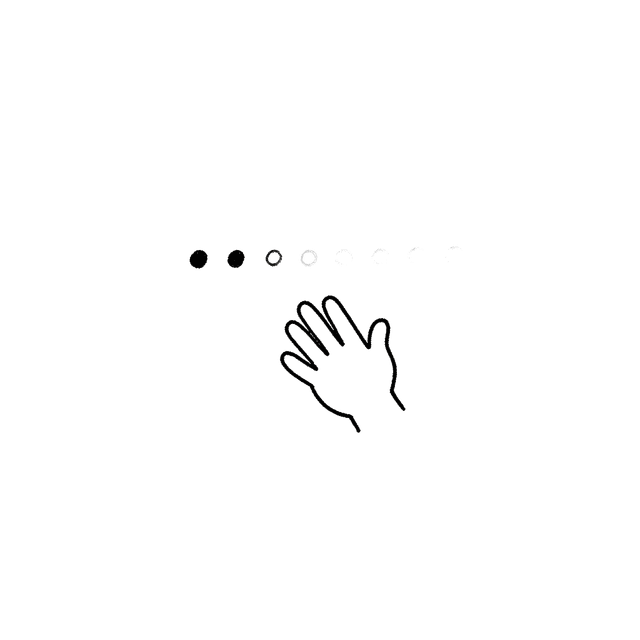
A steady-beat game in which an 8-beat pulse cycle gradually disappears. Students keep a steady pulse by clapping or stomping on every beat: in round one all eight beats are sounded, in round two beat 8 is kept in the mind only, in round three beats 7 and 8 are silent, and so on until all eight beats are felt in the mind with no sound at all. Finally everyone sounds beat 1 of the next cycle to check that the inner pulse matches. The activity trains steady beat and inner hearing.
Procedures
- 1
Set an 8-beat pulse cycle; the whole class keeps it steady by clapping (or stomping, tapping legs...) on every beat.
- 2
Round 1: sound all eight beats.
- 3
Round 2: keep beat 8 in your mind only - do not clap it, but keep counting it inside.
- 4
Round 3: keep beats 7 and 8 in your mind; clap only beats 1 to 6.
- 5
Keep going: with each round, one more beat at the end moves into the mind, until all eight beats are felt in the mind with no sound at all.
- 6
Final round: after feeling all eight beats silently, everyone claps beat 1 of the next cycle - see whether the inner pulse matches.
Variations
1. Not only clapping: try stomping, tapping legs, snapping fingers, and other body percussion.
2. Play the pulse with Orff classroom instruments (shakers, tambourines, woodblocks) instead.
3. Change the cycle length: try 4 beats or 16 beats.
4. Split into two groups: one group sounds the beat while the other keeps it in mind, then switch roles.
Reference Video Link
Activity Preparation
No special props needed; optional Orff instruments (shakers, tambourines, woodblocks) for the variation.
Activity Sources
- Source Type:
- Shared by colleague
MAPS teaching activities may come from a variety of sources, including original contributions by the MAPS team, online resources, published materials, activities learned from teachers, activities shared by colleagues, traditional teaching practices, and other sources. When a source can be reasonably identified, we make every effort to acknowledge it on the relevant activity page or in the accompanying reference information.
Some content may be organized, translated, structured, or adapted by the MAPS team for specific teaching contexts. Such editorial or instructional adaptation does not mean that MAPS claims ownership of the underlying third-party material. Rights to third-party content remain with the original authors, publishers, or other lawful rights holders.
If you are an author, copyright holder, or authorized representative and have questions or concerns regarding the source, attribution, or use of any content, please contact us:
Email: musicactivityps@gmail.com
The Vanishing Beat
Summary
A steady-beat game in which an 8-beat pulse cycle gradually disappears. Students keep a steady pulse by clapping or stomping on every beat: in round one all eight beats are sounded, in round two beat 8 is kept in the mind only, in round three beats 7 and 8 are silent, and so on until all eight beats are felt in the mind with no sound at all. Finally everyone sounds beat 1 of the next cycle to check that the inner pulse matches. The activity trains steady beat and inner hearing.
Procedures
- 1
Set an 8-beat pulse cycle; the whole class keeps it steady by clapping (or stomping, tapping legs...) on every beat.
- 2
Round 1: sound all eight beats.
- 3
Round 2: keep beat 8 in your mind only - do not clap it, but keep counting it inside.
- 4
Round 3: keep beats 7 and 8 in your mind; clap only beats 1 to 6.
- 5
Keep going: with each round, one more beat at the end moves into the mind, until all eight beats are felt in the mind with no sound at all.
- 6
Final round: after feeling all eight beats silently, everyone claps beat 1 of the next cycle - see whether the inner pulse matches.
Variations
1. Not only clapping: try stomping, tapping legs, snapping fingers, and other body percussion.
2. Play the pulse with Orff classroom instruments (shakers, tambourines, woodblocks) instead.
3. Change the cycle length: try 4 beats or 16 beats.
4. Split into two groups: one group sounds the beat while the other keeps it in mind, then switch roles.
Reference Video Link
Activity Preparation
No special props needed; optional Orff instruments (shakers, tambourines, woodblocks) for the variation.
Activity Sources
- Source Type:
- Shared by colleague
MAPS teaching activities may come from a variety of sources, including original contributions by the MAPS team, online resources, published materials, activities learned from teachers, activities shared by colleagues, traditional teaching practices, and other sources. When a source can be reasonably identified, we make every effort to acknowledge it on the relevant activity page or in the accompanying reference information.
Some content may be organized, translated, structured, or adapted by the MAPS team for specific teaching contexts. Such editorial or instructional adaptation does not mean that MAPS claims ownership of the underlying third-party material. Rights to third-party content remain with the original authors, publishers, or other lawful rights holders.
If you are an author, copyright holder, or authorized representative and have questions or concerns regarding the source, attribution, or use of any content, please contact us:
Email: musicactivityps@gmail.com