MAPS
Word Rhythm Game
Summary
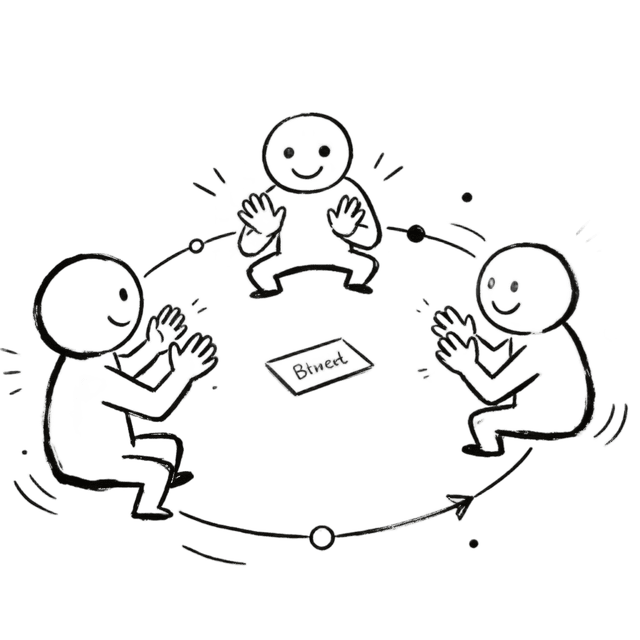
Word Rhythm Game is a rhythm-training activity that connects everyday words with specific rhythmic patterns. Students find words whose number of syllables and rhythmic flow match a given rhythm—for example, a two-syllable word such as “apple” for two eighth notes, or a four-syllable word such as “watermelon” for four sixteenth notes. As they speak the words, students clap or pat the rhythm, turning abstract rhythmic notation into patterns they can both say and physically perform. The activity helps students build auditory and kinesthetic connections to rhythmic patterns and is a typical application of Speech Rhythm in Orff-based teaching. It is especially suitable for introducing rhythm concepts to younger elementary students.
Procedures
- 1
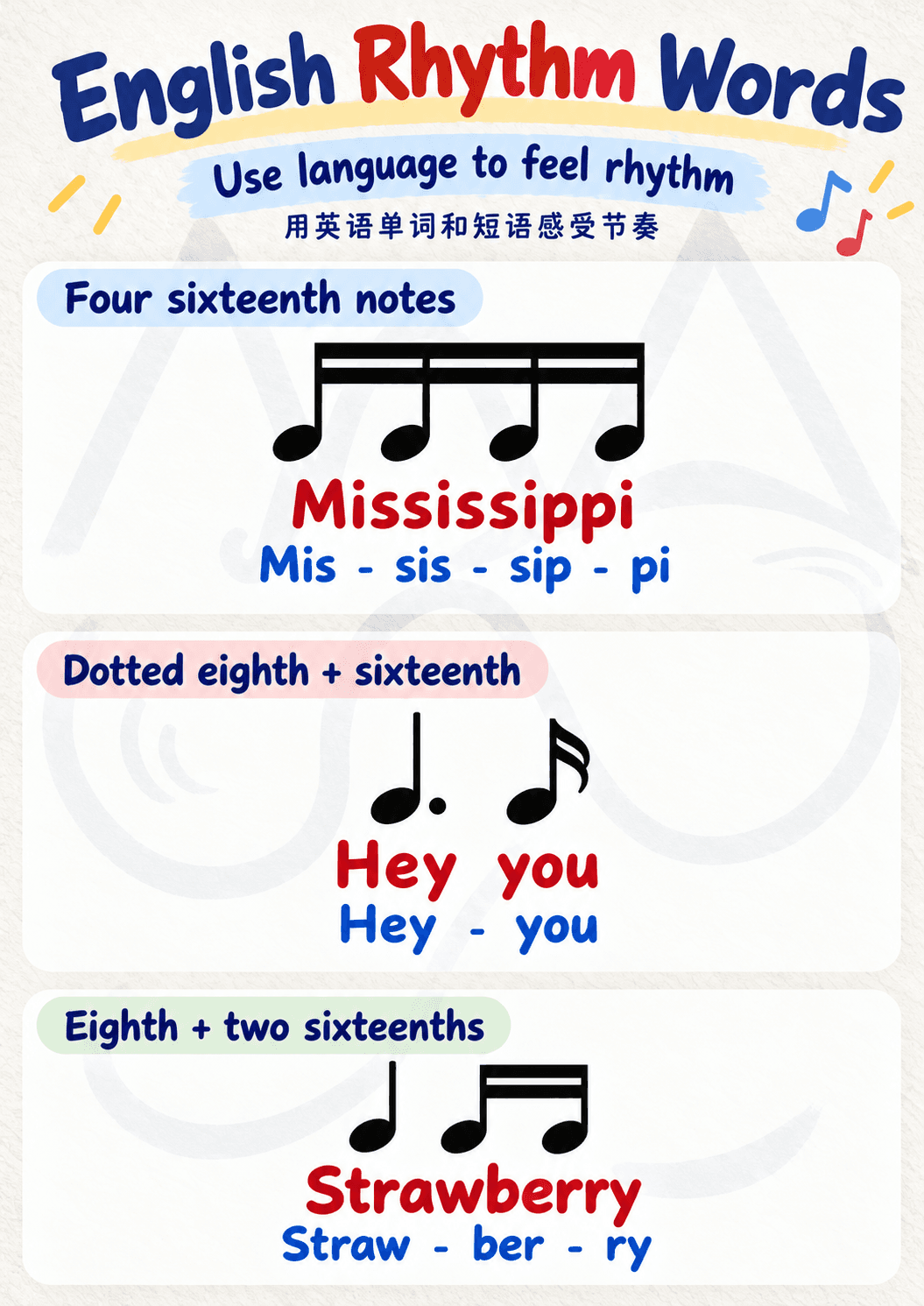
Introduce the Rhythm Patterns: The teacher displays the target rhythmic patterns on the board, such as quarter notes, eighth notes, eighth–two sixteenths, two sixteenths–eighth, and sixteenth-note patterns. Students first speak the rhythms using a neutral syllable such as “ta” and clap them to establish an aural sense of each pattern.
- 2
Match Words to Rhythms: As a class, students brainstorm words that match the syllable count and rhythmic structure of each pattern.
- 3
Speak and Clap: Students say each word while clapping the corresponding rhythm, or use another body-percussion movement such as stomping. They experience the connection between the number of spoken syllables and the number of notes in the rhythmic pattern while maintaining a steady beat.
- 4
Rhythm Chain: Students take turns contributing their own word to complete a one-measure rhythm. The whole class repeats the rhythm by clapping, allowing students to check whether each contribution fits correctly.
- 5
Create a “Rhythm Sentence”: Students combine several words into a rhythmically organized phrase or sentence. The whole class performs it together and adds body percussion such as clapping, patting, or stomping to create a short **speech-rhythm composition**.
- 6
Extension: Use the word rhythms as accompaniment for a familiar song, or combine them with another group to create a two-part rhythmic texture.
Variations
1. Guess the Word” Game: One student claps the rhythm of a word without saying it—for example, clapping the rhythm of “strawberry.”The rest of the class guesses the word. This reverses the usual process from word → rhythm to rhythm → word, helping students develop rhythmic recognition and recall.
2. Rhythm Name Cards: Each student creates a short rhythm based on the natural syllables of their name—for example, “Sam” as a one-syllable rhythm, “Megan” as a two-syllable rhythm, or “Emily” as a three-syllable rhythm. Students clap their name rhythms while introducing themselves, making this variation useful as both a rhythm activity and a classroom icebreaker.
3. Word Categories: Organize words by theme, such as fruits, animals, or school supplies. Students combine words from the same category—such as apple, banana, strawberry—into short rhythmic phrases and perform them as a “Fruit Chant” or “Animal Chant.”
4. Layered Body Percussion (Orff-Style): Assign different rhythmic patterns to different body-percussion parts—for example, one group claps one rhythm, another pats their legs, and a third stomps a contrasting rhythm. Combine the parts to create a three-part rhythmic ensemble and give students experience with layered rhythmic textures.
5. Speech Rhythm + Melod: Add fixed pitches, such as do–mi–sol, or a familiar melodic pattern to a previously created speech rhythm. Students move from speaking the rhythmic phrase to singing it, creating a bridge from rhythm to melody.
6. Rhythm Dictation: The teacher claps a sequence of rhythmic patterns, and students arrange word cards in the corresponding order. For example, cards such as “cat,” “apple,” and “strawberry” can represent contrasting syllabic rhythms. This variation develops rhythmic memory, recognition, and reproduction.
Activity Preparation
Rhythm pattern cards or rhythms written on the board; word cards, which students may prepare in advance; no special equipment is required beyond a regular classroom space.
Activity Sources
- Source Type:
- Textbook / Book
- Source:
- Orff Music Education: Theory and Practice); Kodály rhythm-syllable pedagogy.
MAPS teaching activities may come from a variety of sources, including original contributions by the MAPS team, online resources, published materials, activities learned from teachers, activities shared by colleagues, traditional teaching practices, and other sources. When a source can be reasonably identified, we make every effort to acknowledge it on the relevant activity page or in the accompanying reference information.
Some content may be organized, translated, structured, or adapted by the MAPS team for specific teaching contexts. Such editorial or instructional adaptation does not mean that MAPS claims ownership of the underlying third-party material. Rights to third-party content remain with the original authors, publishers, or other lawful rights holders.
If you are an author, copyright holder, or authorized representative and have questions or concerns regarding the source, attribution, or use of any content, please contact us:
Email: musicactivityps@gmail.com
Word Rhythm Game
Summary
Word Rhythm Game is a rhythm-training activity that connects everyday words with specific rhythmic patterns. Students find words whose number of syllables and rhythmic flow match a given rhythm—for example, a two-syllable word such as “apple” for two eighth notes, or a four-syllable word such as “watermelon” for four sixteenth notes. As they speak the words, students clap or pat the rhythm, turning abstract rhythmic notation into patterns they can both say and physically perform. The activity helps students build auditory and kinesthetic connections to rhythmic patterns and is a typical application of Speech Rhythm in Orff-based teaching. It is especially suitable for introducing rhythm concepts to younger elementary students.
Procedures
- 1
Introduce the Rhythm Patterns: The teacher displays the target rhythmic patterns on the board, such as quarter notes, eighth notes, eighth–two sixteenths, two sixteenths–eighth, and sixteenth-note patterns. Students first speak the rhythms using a neutral syllable such as “ta” and clap them to establish an aural sense of each pattern.
- 2
Match Words to Rhythms: As a class, students brainstorm words that match the syllable count and rhythmic structure of each pattern.
- 3
Speak and Clap: Students say each word while clapping the corresponding rhythm, or use another body-percussion movement such as stomping. They experience the connection between the number of spoken syllables and the number of notes in the rhythmic pattern while maintaining a steady beat.
- 4
Rhythm Chain: Students take turns contributing their own word to complete a one-measure rhythm. The whole class repeats the rhythm by clapping, allowing students to check whether each contribution fits correctly.
- 5
Create a “Rhythm Sentence”: Students combine several words into a rhythmically organized phrase or sentence. The whole class performs it together and adds body percussion such as clapping, patting, or stomping to create a short **speech-rhythm composition**.
- 6
Extension: Use the word rhythms as accompaniment for a familiar song, or combine them with another group to create a two-part rhythmic texture.
Variations
1. Guess the Word” Game: One student claps the rhythm of a word without saying it—for example, clapping the rhythm of “strawberry.”The rest of the class guesses the word. This reverses the usual process from word → rhythm to rhythm → word, helping students develop rhythmic recognition and recall.
2. Rhythm Name Cards: Each student creates a short rhythm based on the natural syllables of their name—for example, “Sam” as a one-syllable rhythm, “Megan” as a two-syllable rhythm, or “Emily” as a three-syllable rhythm. Students clap their name rhythms while introducing themselves, making this variation useful as both a rhythm activity and a classroom icebreaker.
3. Word Categories: Organize words by theme, such as fruits, animals, or school supplies. Students combine words from the same category—such as apple, banana, strawberry—into short rhythmic phrases and perform them as a “Fruit Chant” or “Animal Chant.”
4. Layered Body Percussion (Orff-Style): Assign different rhythmic patterns to different body-percussion parts—for example, one group claps one rhythm, another pats their legs, and a third stomps a contrasting rhythm. Combine the parts to create a three-part rhythmic ensemble and give students experience with layered rhythmic textures.
5. Speech Rhythm + Melod: Add fixed pitches, such as do–mi–sol, or a familiar melodic pattern to a previously created speech rhythm. Students move from speaking the rhythmic phrase to singing it, creating a bridge from rhythm to melody.
6. Rhythm Dictation: The teacher claps a sequence of rhythmic patterns, and students arrange word cards in the corresponding order. For example, cards such as “cat,” “apple,” and “strawberry” can represent contrasting syllabic rhythms. This variation develops rhythmic memory, recognition, and reproduction.
Activity Preparation
Rhythm pattern cards or rhythms written on the board; word cards, which students may prepare in advance; no special equipment is required beyond a regular classroom space.
Activity Sources
- Source Type:
- Textbook / Book
- Source:
- Orff Music Education: Theory and Practice); Kodály rhythm-syllable pedagogy.
MAPS teaching activities may come from a variety of sources, including original contributions by the MAPS team, online resources, published materials, activities learned from teachers, activities shared by colleagues, traditional teaching practices, and other sources. When a source can be reasonably identified, we make every effort to acknowledge it on the relevant activity page or in the accompanying reference information.
Some content may be organized, translated, structured, or adapted by the MAPS team for specific teaching contexts. Such editorial or instructional adaptation does not mean that MAPS claims ownership of the underlying third-party material. Rights to third-party content remain with the original authors, publishers, or other lawful rights holders.
If you are an author, copyright holder, or authorized representative and have questions or concerns regarding the source, attribution, or use of any content, please contact us:
Email: musicactivityps@gmail.com